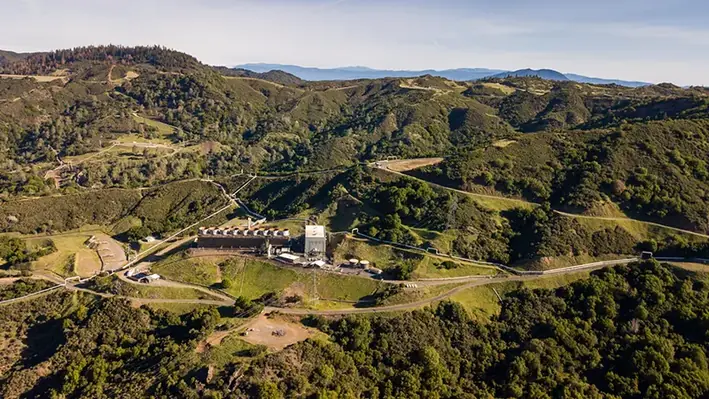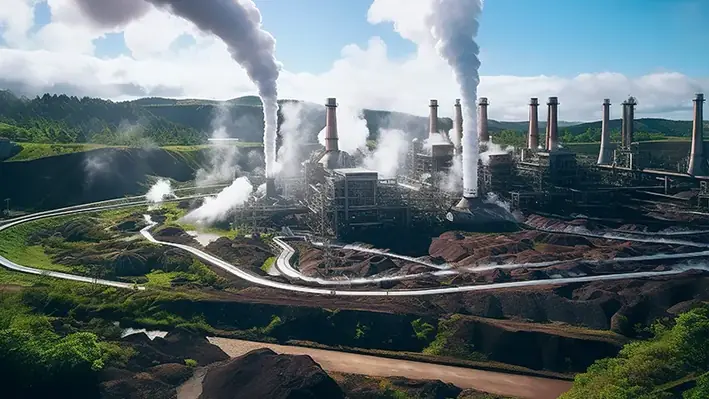
XGS Energy and California Community Power (CC Power) have executed a Geothermal Exploration, Offtake and Development Engagement (GEODE) Agreement for the development of next-generation geothermal energy in California.
The U.S. Department of Energy’s Hydrocarbons and Geothermal Energy Office (HGEO) has announced a US$14mn demonstration project in Pennsylvania to support field tests for enhanced geothermal systems (EGS).
Vallourec, supplier of premium tubular solutions for the energy industry, and Fervo Energy, the global pioneer of next-generation geothermal energy, have signed a five-year supply agreement worth up to US$800mn whereby Vallourec will act as Fervo’s exclusive supplier of U.S. manufactured tubular solutions and VAM connections through its distribution partner Sooner, Inc.
Vallourec will provide a wide range of premium tubular solutions engineered for the temperature conditions of next-generation geothermal wells, including its VAM high-torque semi-flush connections – originally developed for shale applications and now proven in geothermal environments.
The deal illustrates the potential for transferring and adapting technology and expertise from the oil and gas sector, also characterised by extreme high temperature environments, to the fast-growing geothermal sector. Ensuring long-term geothermal well integrity at high temperatures is a key challenge for geothermal developers.
The collaboration will establish a fully domestic supply chain for critical geothermal well infrastructure at a time when investment in next-generation geothermal has accelerated rapidly, driven by a rising demand for baseload, carbon-free power to support electrification and data centre expansion. Vallourec has in fact seen an increase in demand for its geothermal products increase more than three-fold.
The deal supports Fervo’s strategy to deploy repeatable GeoBlocks – standardised 50 MW units of geothermal energy, as it scales its operations. It follows Fervo’s signature of a supply deal with Turboden America for the supply of ORC turbines for up to 35 GeoBlocks, also designed to strengthen the US supply chain for geothermal development.
Philippe Guillemot, chairman of the Board of Directors and chief executive officer of Vallourec, commented, “Our model of low-carbon, vertically-integrated production hubs located close to our markets is paired with our strong focus on innovation and tailor-made technological solutions in making Vallourec a key strategic partner for customers like Fervo. We look forward to supporting the development of next-generation geothermal energy needed to power the rising electricity demands, in particular due to the hypergrowth of data centres in the United States of America.
Tim Latimer, chief executive officer of Fervo Energy added, “Delivering next-generation geothermal at scale requires precision, reliability, and strong collaboration across the supply chain. Vallourec brings deep expertise in manufacturing low-carbon, high-performance tubular solutions that will play a critical role in enabling the rapid buildout of GeoBlocks at Cape Station and beyond."
Turboden America LLC, subsidiary of Turboden S.p.A is set to supply Organic Rankine cycle (ORC) turbines to Fervo Energy for up to 35 GeoBlocks – Fervo’s standardised 50 MW ORC power plants – totalling 1.7GW of carbon-free, dispatchable power capacity, under a three-year framework agreement.
Turboden’s ORC turbines convert heat into power without increasing fuel consumption, water use, or CO2 emissions. The agreement expands the US-based supply chain for Turboden’s proprietary ORC turbine design, shortening lead times and thereby potentially boosting the supply of geothermal power to meet rising demand. The framework agreement also establishes delivery timelines that are expected to enable faster project execution and support supply chain resilience as Fervo, a leader in next-generation geothermal development, scales. It builds on an earlier agreement to supply ORC units for three 50 MW GeoBlocks at Fervo’s enhanced Cape Station geothermal development in Utah. The companies are currently in the advanced commissioning stage of the Phase I project at Cape Station, with startup expected later this year.
With the framework agreement, Fervo sees Turboden as a dependable long-term supplier as it looks to rely on ORC technology as a core component of its projects. Both companies plan to strengthen system performance by learning from deployment experience. The agreement positions Turboden and Fervo to deliver fast tracked projects to address the rapidly growing demand from data centres for geothermal energy.
“Over the past two years, we have built a constructive strategic relationship with Fervo, and this framework agreement reflects a mutual commitment to continued and expanded collaboration. Geothermal energy will be essential in stabilising a strained power grid with clean, firm energy, and Fervo has shown strong leadership in advancing the sector,” said Paolo Bertuzzi, president Turboden America LLC and CEO Turboden S.p.A. “With this announcement, we are prepared to scale delivery in the U.S. market and add megawatts of new generation wherever and however they are required.”
“Expanding our work with Mitsubishi Heavy Industries is a key step in scaling geothermal to meet rising U.S. power demand,” said Tim Latimer, CEO and co-founder of Fervo Energy. “By combining Turboden’s proven ORC technology with the global capabilities of Mitsubishi Heavy Industries, we are strengthening the supply chain needed to build geothermal at scale. This collaboration will play a central role as we continue to develop at Cape Station and beyond and bring reliable, 24/7 carbon-free energy to the grid.”
Banco Bilbao Vizcaya Argentaria (BBVA) has outlined its thoughts on geothermal’s “remarkable transformative potential” in a statement following its participation in the recent groundbreaking Cape Phase I project financing in the USA.
The Spanish multinational financial services group played a key role as Coordinator Lead Arranger and Hedging Coordinator in the financing of the project, which is being developed by Fervo Energy in Beaver County, Utah.
BBVA noted that the project marks a milestone in the commercial-scale deployment of next-generation geothermal in the country.
“Next-generation geothermal technologies are demonstrating remarkable transformative potential,” said Miguel Peña, responsible for project finance at BBVA in the United States and Canada.
“Their ability to scale commercially will be critical to strengthening the renewable energy mix by providing firm and reliable generation that complements intermittent sources such as solar and wind.”
The deal also flags BBVA’s capabilities across the energy sector more broadly and reinforces its presence as a leading project financier in the US market, according to Peña.
“Our commitment as a financial institution is to help innovative cleantech projects be structured and developed with a long-term perspective, facilitating their access to the market,” he said.
Developer Fervo Energy announced earlier in March the successful close of US$421mn in non-recourse debt financing for the Cape Phase I project, calling it a ‘first of a kind’ and an indication of the bankability of enhanced geothermal systems (EGS).
Other major commercial banks and insitutions involved in the project financing include Barclays, HSBC, MUFG, RBC Capital Markets and Société Générale.
All have a wealth of experience as lenders to energy and infrastructure projects globally.
The involvement of such major lenders signals growing investor confidence in geothermal as part of the energy transition, both in the USA, and more broadly across the globe.
BBVA noted that its participation in the Cape Phase I financing “further consolidates its role as a strategic financial partner to the cleantech ecosystem” and “reinforces its position as one of the leading institutions in the financing of innovative energy projects in the United States.”
The bank added that it intended to continue to promote the development of next-generation infrastructure and accelerate the transition to a low-carbon economy.
The Nevis Island Administration is advancing towards the next phase of its geothermal development following discussions with Iceland Drilling Company to finalise a contract for exploratory drilling.
The Organisation of Eastern Caribbean States Commission has continued to provide technical assistance to the Government of Saint Lucia to support the development of drafting instructions for a Geothermal Energy Development Bill.
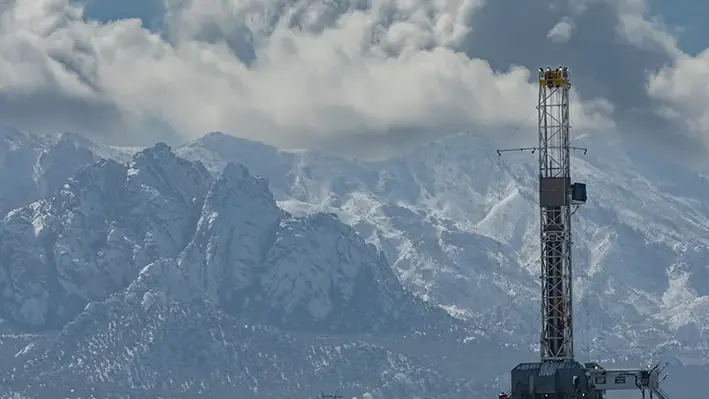
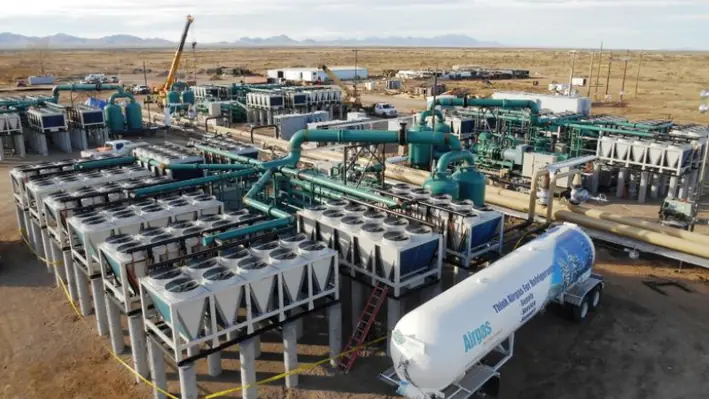
XGS Energy, a developer of next-generation geothermal power systems, is teaming up with energy technology company Baker Hughes to advance XGS’s planned 150-megawatt geothermal project in New Mexico.
A major energy modernisation scheme involving the use of geothermal has been completed at a US Army base in Louisiana.
Corvias, which partners with the Department of War and higher education institutions on infrastructure and energy resiliency challenges, said in a statement that the project would support the military housing community at Fort Polk, converting 3,600 homes to high-efficiency ground source heat pump (GSHP) technology.
It also continues a trend in the roll-out and adoption of geothermal energy for use in military bases and installations elsewhere in the US.
“Energy modernisation is a key part of our long-term partnership with the US Army and reflects our commitment to listening to residents and delivering tangible improvements that matter in their daily lives,” said Kolby Stobbe, senior vice president, property operations at Corvias.
“At Fort Polk, we’ve delivered a community-wide transformation that increases resident comfort and strengthens long-term housing performance and resilience.”
The project replaces legacy HVAC systems with geothermal heating and cooling for more consistent indoor comfort, quieter operation, and improved efficiency, the statement noted.It also builds on prior energy enhancements at the site, including advanced metering and optimised hot water systems.
The upgrades are expected to reduce annual electricity consumption across Fort Polk’s military family housing community by 30%, generating more than US$2.6mn in annual utility and operational cost savings.
The Corvias statement added that the milestone is part of a US$92mn investment in infrastructure improvements to the Fort Polk military family housing community, which also includes renovation, roof replacement and structural improvement works.
“As one of Corvias’ long-standing public-private housing partnerships with the US Army, the Fort Polk military family housing partnership demonstrates how sustained reinvestment can elevate the resident experience while also driving local economic impact,” the Corvias statement added.
“Together, these improvements transform legacy U.S. Army housing into refreshed, modern neighbourhoods that better reflect the expectations of today’s service members and their families.”
Fervo Energy, developer, owner, and operator of next-generation geothermal assets, has announced the successful close of US$421mn in non-recourse debt financing for the first phase of its Cape Station development, a considerable achievement for a “first of a kind” project and an indication of the bankability of enhanced geothermal systems (EGS) as the demand for clean power continues to rise.
Project InnerSpace, the non-profit research organisation accelerating geothermal energy, has partnered with the Society of Petroleum Engineers (SPE) to launch the Geothermal Resources Management System (GRMS), designed to unlock capital for the scaling up of geothermal energy.
The new initiative – a standardised framework for classifying, reporting and communicating geothermal resources and reserves – is funded by Project InnerSpace and based along the lines of the Petroleum Resources Management System (PRMS), the global standard for classifying and communicating petroleum resources and reserves which is managed by the SPE and has unlocked significant levels of oil and gas investment. In 2022 the SPE extended this initiative to non-hydrocarbon resources, including geothermal energy.
Despite strong and growing demand for geothermal energy, capital flows into this industry remain very limited in comparison with the US$600bn invested globally in the oil and gas industry. The GRMS is designed to close that gap by giving the financial community the confidence to release capital at the scale required to accelerate geothermal development.
The launch follows a two-year exercise by Project InnerSpace, involving multiple stakeholders, to identify geothermal financing barriers. This concluded that the absence of a standard, publicly accessible and independently verifiable information framework is the biggest barrier to investment, which could be addressed by developing a system that both financial institutions and the oil and gas industry already use and understand to value geothermal resources.
An initial GRMS framework is expected to be developed within a year, which will give geothermal projects the same financial credibility that oil and gas assets have possessed as a result of the PRMS and means that the financial community can use a trusted and familiar system to evaluate geothermal projects, without having to learn a new system. It is expected to unlock other financing mechanisms including reserves-based lending; insurance underwriting; farm-in/farm-out agreements and joint ventures, secondary market liquidity and SEC reporting compliance.
Significant reductions in legal and transactional structuring costs as well as deal execution timelines are expected through the use of standardised contractual frameworks through the GRMS, which could save more than US$100mn in annual legal cost savings across the industry within four years, it is estimated.
“The financial community already understands how to use the language of large-scale subsurface energy development through oil and gas,” commented Simon Seaton, CEO of the Society of Petroleum Engineers International. “The creation of a Geothermal Resources Management System (GRMS) is a foundational step toward building the market structures and financing mechanisms needed to accelerate geothermal development.”
“GRMS is the equipment of GAAP for accounting – the shared language that gives the financial world the confidence to engage at scale,” added Jamie Beard, Executive Director of Project InnerSpace. “With it in place, every other financial mechanism we need to scale geothermal becomes viable.”
The Arizona Governor’s Office of Resiliency has announced a US$1mn investment in the Arizona Geological Survey (AZGS) to enhance knowledge of the state’s geothermal potential.
The new funding is part of a range of actions by Arizona’s Governor Katie Hobbs to accelerate the state’s geothermal development and expand its economic and energy future as electricity demand grows.
“Arizona is at a crucial crossroads in its energy story, and we have the key resources needed to be a leader in geothermal energy production,” said Hobbs.
“I am taking the steps to make that happen by investing in the Arizona Geological Survey, proposing funding for new geothermal research in my executive budget, and convening a geothermal working group.”
It represents the next step in Hobbs’ focus on building the future of energy in Arizona.
Earlier this month, Hobbs released her FY2027 executive budget proposal, which includes US$1.5mn for geothermal research to expand knowledge of Arizona’s subsurface.
Additionally, a geothermal working group was also assembled within her Arizona Energy Promise Taskforce to catalyse the deployment of next-generation geothermal technologies across Arizona.
“Arizona is ready to leverage its status as a global leader in technology industries and a strong foundation in subsurface industries like mining,” said Hobbs.
“Geothermal will be a future-defining industry for Arizona, lowering energy costs and strengthening our grid. We are open for business.”
AZGS brings more than 45 years of experience in geothermal research, with expertise in subsurface characterisation and statewide data development, including leading the US Department of Energy’s (DOE) US$23mn project to create a National Geothermal Data System, according to Brian F. Gootee, Senior Research Geologist and Energy Geology Group Chief at AZGS.
“With this rich legacy of geothermal work, AZGS remains committed to advancing Arizona’s geothermal development through rigorous science and close collaboration with the Governor’s Office.”
Arizona also recently joined the DOE and the National Association of State Energy Officials’ Geothermal Power Accelerator, a new collaboration among 13 states to rapidly expand geothermal power development in partnership with the private sector.
According to the DOE and the National Laboratory of the Rockies, next-generation geothermal energy potential in the USA is at least 26.5 terawatts, with a large concentration of resources in the Mountain West.
A 2025 Princeton University study assesses that geothermal energy could meet 20% of US electricity demand by 2050.Across various scenarios modelled by Princeton, the deployment of enhanced geothermal within the energy mix reduced wholesale electricity costs by 22–55%.
“An all-of-the-above approach to electric generation is essential to maintaining grid reliability while keeping rates just and reasonable for Arizona’s families and businesses,” said Arizona Corporation Commission Chair Nick Myers.
“Technological advancements in geothermal energy show significant promise in Arizona and could become a valuable addition to our energy mix. If these technologies prove to be cost-effective, ratepayers stand to benefit from Arizona’s untapped geothermal resources.”
Arizona utilities estimate significant growing energy needs over the next 15 years, with some utilities projecting a 40% increase in peak demand.
Electricity demand in Arizona is rising fast due to several factors, including the state’s expanding population as well as economic growth.