
North America
North America

- Region: North America
- Topics: Geothermal
- Date: 19th August 2025
Enhanced geothermal energy is poised to power the future of Artificial Intelligence (AI), according to a new white paper by Fervo Energy.
AI requires huge amounts of energy, but is advancing faster than the power grid can support, which poses one of the central dilemmas to its ongoing roll-out.
Leading voices in the field now acknowledge that AI’s growth will be limited by the availability of reliable energy, the white paper notes.
In a 2025 Senate hearing, OpenAI CEO Sam Altman noted that “the cost of AI will converge to the cost of energy… the abundance of [AI] will be limited by the abundance of energy.”
According to Fervo Energy, the timing is becoming urgent.
Even conservative projections show electricity demand from data centres growing faster than new power generation can come online.
While some developers have turned to nuclear and natural gas to supply data centres with needed firm power — such as Microsoft’s restart of the Three Mile Island nuclear facility or ExxonMobil’s plans for new gas plants — those options face limits in availability, long timelines and supply chain constraints.
“The speed and scale of Enhanced Geothermal Systems (EGS) make the technology uniquely positioned to power data centres before 2030,” Fervo Energy notes.
The white paper goes on to outline the advantages of why EGS is a reliable, clean and scalable solution that can meet the gigawatt-scale power needs of modern data centres.
They include:
Economies of scale: Bigger data centre clusters require bigger power plants, offering a fit with EGS because cost per megawatt declines as project size increases.
Abundant resources: Reports from the National Renewable Energy Laboratory and the US Geological Survey identify hundreds of gigawatts of untapped EGS resource potential across the country.
Speed to market: Standardised, modular plant designs make it possible to complete projects in as little as 18 months.
Utah stands out as the optimal starting point for the first enhanced geothermal-powered data centre cluster, the company adds.
“The state has high geothermal resource potential, supportive permitting policies, and strong community and commercial engagement. Utah already hosts gigawatts of data centre capacity and is one of the fastest-growing tech hubs in the US.”
It is also home to the Department of Energy’s FORGE research site, three operational geothermal plants, and the site of Fervo Energy’s Cape Station, the largest EGS development in the world.
“By pairing EGS development with the rapid growth of data infrastructure, regions like Utah are positioned to deliver the reliable, clean, and domestic energy supply needed to support continued AI leadership,” Fervo Energy adds.

- Region: North America
- Topics: Geothermal
- Date: 18 August, 2025
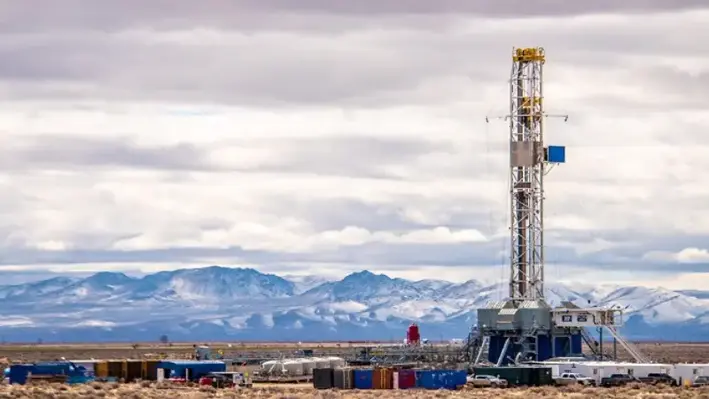
AirJoule Technologies Corporation, a leader in atmospheric water generation, has announced plans to deploy its AirJoule system in Hubbard, Texas.
- Region: North America
- Topics: Geothermal
- Date: 14 August, 2025
The Department of Defense continues to lay the groundwork for the deployment of new geothermal technology across military installations to support increase power generation.

- Region: North America
- Topics: Geothermal
- Date: 8 August, 2025
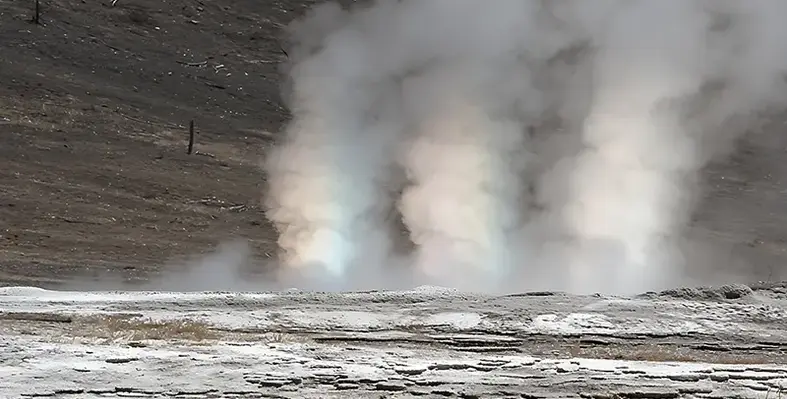
In a recent LinkedIn update, Ignis H2 Energy Inc. announced that Chugach Electric Association, Alaska’s largest electric utility, has issued a non-binding Letter of Interest (LOI) to pursue a potential Power Purchase Agreement (PPA) for up to 200 megawatts of baseload geothermal power.
- Region: North America
- Topics: Geothermal
- Date: 6 August, 2025
Next-generation geothermal energy may soon be a cost-competitive way to fill the need for clean, firm power in the USA, according to a new report by McKinsey & Company.
It estimates that around US$900mn in private capital has been channeled toward next-generation geothermal technologies and projects in the past five years.
However, anticipated cost decreases — coupled with the urgent and growing need for additional power supply — may draw even more attention to the sector in the coming years.
“Our analysis suggests that more than 780 megawatts of letters of intent and power purchase agreements (PPAs) have been signed over the past two years, and approximately one gigawatt of next-generation geothermal projects is in various stages of development,” McKinsey notes in the report.
The document also singles out two next-generation approaches closest to market: Enhanced geothermal systems (EGSs) and Advanced closed-loop systems (ACLs).
EGSs use hydraulic fracturing to create subsurface fractures through hot rock three to five km below the surface.
Water injected into a well absorbs heat while traveling through the fractures and exits through another well to the surface where the heat is converted to electricity.
ACLs create a radiator-like, closed-loop system of horizontal wells filled with fluid.
These loops are deeper in the ground — four to eight km — potentially increasing the cost relative to EGSs.However, having a closed loop reduces overall water demand, which could boost feasibility in arid regions.
Most importantly, McKinsey notes, industry costs could drop significantly in the next decade.
“Improvements in technology derived from unconventional oil and gas drilling have combined with growing energy demand to push next-generation geothermal from a niche option to a cost-competitive choice in some areas, with strong potential to become cheaper over the next decade,” the report states.
It estimates that levelised production costs for a first-of-a-kind, commercial-scale (more than 50 megawatts) next-generation geothermal facility in the US could range from US$75 to US$120 per megawatt-hour.
Exploration, drilling, and power plant capital expenditures make up more than 70% of costs.
But by 2035, costs of next-generation geothermal technology in the US could fall to about US$45 to US$65 per megawatt-hour, according to the report.
“Although other clean-energy sources will also experience cost decreases over the same period, we expect next-generation geothermal to outcompete other sources of clean, firm power,” McKinsey notes.
- Region: North America
- Topics: Geothermal
- Date: 4 August, 2025
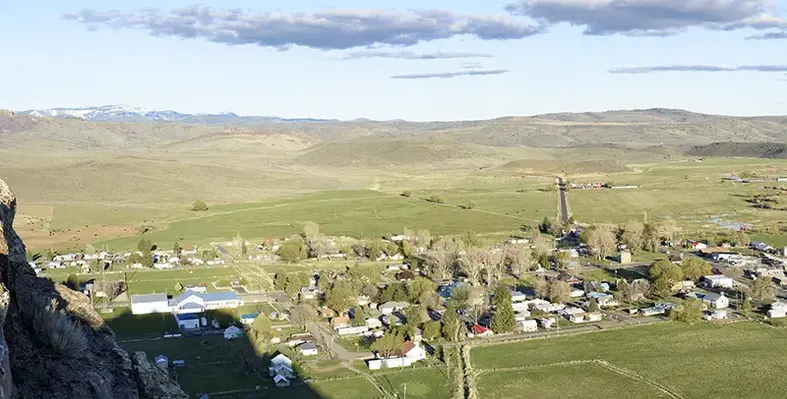
The Bureau of Land Management (BLM) has successfully leased two geothermal parcels in Malheur County, Oregon, totaling 5,235 acres of public land.

- Region: North America
- Topics: Geothermal
- Date: 1 August, 2025
Quaise Energy, a pioneer in grid-scale superhot geothermal technology, has reached a critical milestone by successfully drilling to a depth of 100 meters at its Central Texas field site using millimeter wave technology.

- Region: North America
- Topics: Geothermal
- Date: 23 July, 2025
The Colorado Energy Office (CEO) has announced Adams County will receive funding for two projects to support geothermal heating initiatives.
- Region: North America
- Topics: Geothermal
- Date: 21 July, 2025
Gov. Michelle Lujan Grisham recently announced a groundbreaking partnership between XGS Energy and Meta to develop 150MW of advanced geothermal energy in New Mexico.
- Region: North America
- Topics: Geothermal
- Date: 21 July, 2025
The Bureau of Land Management has approved the 30MW Crescent Valley production facility and associated transmission line.

- Region: North America
- Topics: Geothermal
- Date: 15th July 2025
According to a new paper by the think tank, Carnegie Endowment, geothermal energy’s moment is here — and North America is a hotspot for innovation.
“North America, particularly the Western part of the United States, is the optimal environment for next-generation geothermal commercialisation,” the report notes, “because of strong hot dry rock resources, incumbent geothermal and drilling industries, deep expertise in complex drilling techniques from shale production, proximity to equipment (such as rigs and casings), and a dynamic startup culture and venture capital ecosystem.”
The report, Unlocking Global Geothermal Energy: Pathways to Scaling International Deployment of Next-Generation Geothermal, also outlines some the technologies shaping the industry and identifies its global potential.
The paper considers the potential of next‑generation geothermal technologies — particularly Enhanced Geothermal Systems (EGS) and Advanced/Closed‑Loop Geothermal Systems (AGS) — to transform global clean power generation in the years ahead.
These advances leverage oil and gas industry expertise, such as deep and horizontal drilling and hydraulic fracturing, to access superhot rock deep underground.
Again, North America is in a strong position to lead in this regard.
Meteoric electricity demand growth from data centres and Big Tech’s interest in next-generation geothermal only furthers this argument, the report adds.
“The world’s first commercial scale EGS facility is being finalised in Utah, closed-loop systems are under development in California and New Mexico, and other early-stage projects are beginning in the United States and Canada,” the report states.
“The US Air Force has contracted nearly all regional next-generation geothermal firms to develop their technologies on American military installations across Texas and California."
The report also highlights ways in which the US could take the lead in spreading these technologies to other parts of the globe.
It suggests the US International Development Finance Corporation move beyond traditional commercial loans to create risk-sharing instruments tailored to geothermal power’s unique challenges.
It also states that the US could incorporate geothermal into existing bilateral and multilateral energy, economic, and security platforms — a tactic it calls advancing ‘geothermal diplomacy’.
- Region: All
- Topics: Geothermal
- Date: 14 July, 2025
Startup company Geothermal Radar has announced the development of an exclusive global thermal model that enables users to exploit geothermal gradients across areas of interest.