
North America
North America

- Region: North America
- Topics: Geothermal
- Date: 28th April 2026
Baker Hughes reiterated its geothermal ambitions in its Q1 2026 results, announced on 23 April, following its involvement in XGS Energy’s New Mexico project.

- Region: North America
- Topics: Geothermal
- Date: 24th April 2026
The US House of Representatives passed the Harnessing Energy At Thermal Sources (HEATS) Act, to expand domestic energy production, cut red tape and secure energy supply chains.

- Region: North America
- Topics: Geothermal
- Date: 21st April 2026
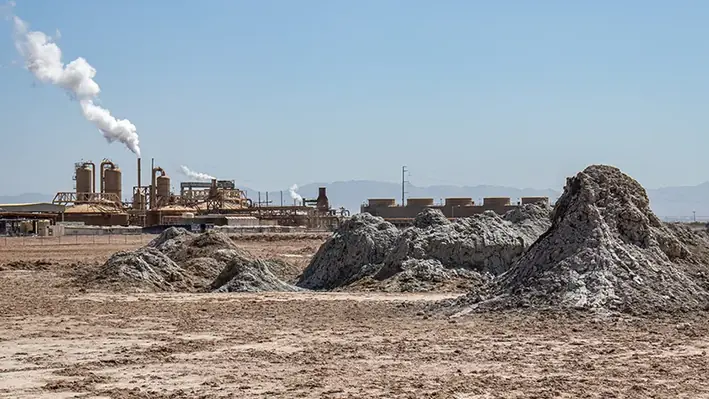
The Colorado Energy Office (CEO) has announced US$12.4mn in funding has been awarded to seven geothermal projects across the state to help support cleaner heating and cooling and electricity development.
- Region: North America
- Topics: Geothermal
- Date: 20th April 2026
EIG has announced the initial closing of EIG Geothermal Catalyst Partners, a development fund focused on investments supporting next-generation geothermal projects in the USA.

- Region: North America
- Topics: Geothermal
- Date: 16th April 2026
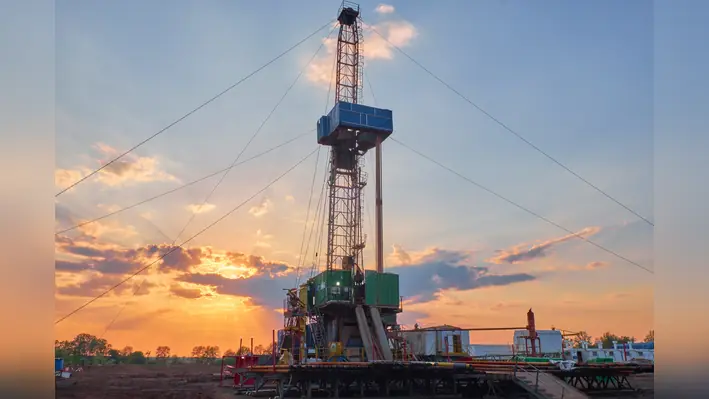
XGS Energy and California Community Power (CC Power) have executed a Geothermal Exploration, Offtake and Development Engagement (GEODE) Agreement for the development of next-generation geothermal energy in California.
- Region: North America
- Topics: Geothermal
- Date: 14th April 2026
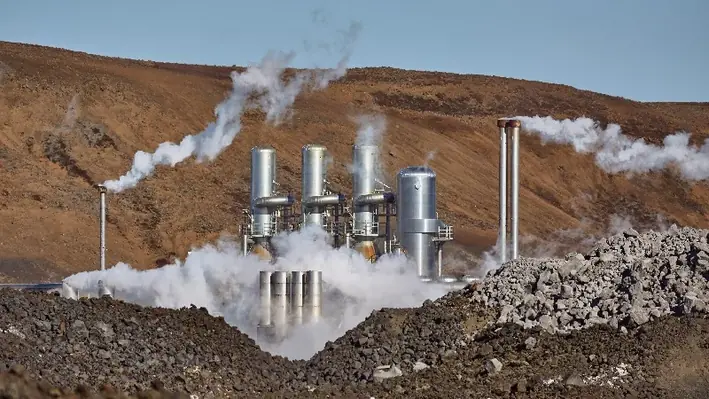
The U.S. Department of Energy’s Hydrocarbons and Geothermal Energy Office (HGEO) has announced a US$14mn demonstration project in Pennsylvania to support field tests for enhanced geothermal systems (EGS).
- Region: North America
- Topics: Geothermal
- Date: 10th April 2026
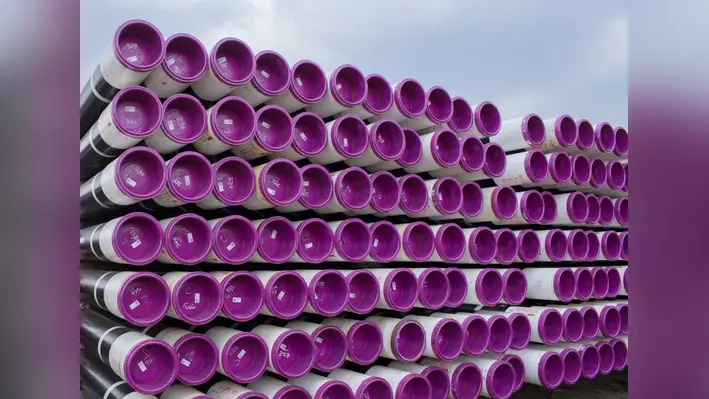
Vallourec, supplier of premium tubular solutions for the energy industry, and Fervo Energy, the global pioneer of next-generation geothermal energy, have signed a five-year supply agreement worth up to US$800mn whereby Vallourec will act as Fervo’s exclusive supplier of U.S. manufactured tubular solutions and VAM connections through its distribution partner Sooner, Inc.
Vallourec will provide a wide range of premium tubular solutions engineered for the temperature conditions of next-generation geothermal wells, including its VAM high-torque semi-flush connections – originally developed for shale applications and now proven in geothermal environments.
The deal illustrates the potential for transferring and adapting technology and expertise from the oil and gas sector, also characterised by extreme high temperature environments, to the fast-growing geothermal sector. Ensuring long-term geothermal well integrity at high temperatures is a key challenge for geothermal developers.
The collaboration will establish a fully domestic supply chain for critical geothermal well infrastructure at a time when investment in next-generation geothermal has accelerated rapidly, driven by a rising demand for baseload, carbon-free power to support electrification and data centre expansion. Vallourec has in fact seen an increase in demand for its geothermal products increase more than three-fold.
The deal supports Fervo’s strategy to deploy repeatable GeoBlocks – standardised 50 MW units of geothermal energy, as it scales its operations. It follows Fervo’s signature of a supply deal with Turboden America for the supply of ORC turbines for up to 35 GeoBlocks, also designed to strengthen the US supply chain for geothermal development.
Philippe Guillemot, chairman of the Board of Directors and chief executive officer of Vallourec, commented, “Our model of low-carbon, vertically-integrated production hubs located close to our markets is paired with our strong focus on innovation and tailor-made technological solutions in making Vallourec a key strategic partner for customers like Fervo. We look forward to supporting the development of next-generation geothermal energy needed to power the rising electricity demands, in particular due to the hypergrowth of data centres in the United States of America.
Tim Latimer, chief executive officer of Fervo Energy added, “Delivering next-generation geothermal at scale requires precision, reliability, and strong collaboration across the supply chain. Vallourec brings deep expertise in manufacturing low-carbon, high-performance tubular solutions that will play a critical role in enabling the rapid buildout of GeoBlocks at Cape Station and beyond."
- Region: North America
- Topics: Geothermal
- Date: 7th April 2026
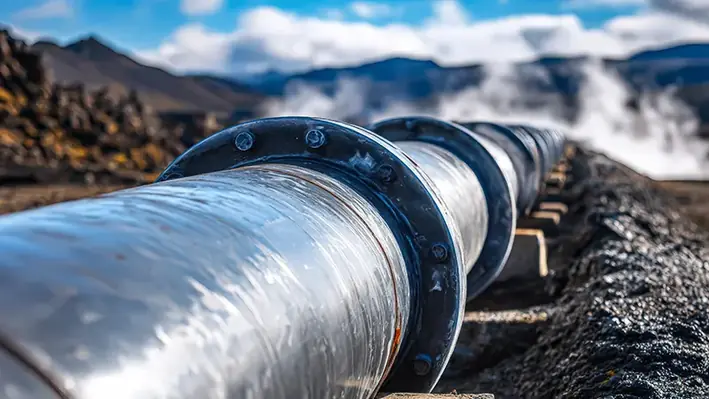
Turboden America LLC, subsidiary of Turboden S.p.A is set to supply Organic Rankine cycle (ORC) turbines to Fervo Energy for up to 35 GeoBlocks – Fervo’s standardised 50 MW ORC power plants – totalling 1.7GW of carbon-free, dispatchable power capacity, under a three-year framework agreement.
Turboden’s ORC turbines convert heat into power without increasing fuel consumption, water use, or CO2 emissions. The agreement expands the US-based supply chain for Turboden’s proprietary ORC turbine design, shortening lead times and thereby potentially boosting the supply of geothermal power to meet rising demand. The framework agreement also establishes delivery timelines that are expected to enable faster project execution and support supply chain resilience as Fervo, a leader in next-generation geothermal development, scales. It builds on an earlier agreement to supply ORC units for three 50 MW GeoBlocks at Fervo’s enhanced Cape Station geothermal development in Utah. The companies are currently in the advanced commissioning stage of the Phase I project at Cape Station, with startup expected later this year.
With the framework agreement, Fervo sees Turboden as a dependable long-term supplier as it looks to rely on ORC technology as a core component of its projects. Both companies plan to strengthen system performance by learning from deployment experience. The agreement positions Turboden and Fervo to deliver fast tracked projects to address the rapidly growing demand from data centres for geothermal energy.
“Over the past two years, we have built a constructive strategic relationship with Fervo, and this framework agreement reflects a mutual commitment to continued and expanded collaboration. Geothermal energy will be essential in stabilising a strained power grid with clean, firm energy, and Fervo has shown strong leadership in advancing the sector,” said Paolo Bertuzzi, president Turboden America LLC and CEO Turboden S.p.A. “With this announcement, we are prepared to scale delivery in the U.S. market and add megawatts of new generation wherever and however they are required.”
“Expanding our work with Mitsubishi Heavy Industries is a key step in scaling geothermal to meet rising U.S. power demand,” said Tim Latimer, CEO and co-founder of Fervo Energy. “By combining Turboden’s proven ORC technology with the global capabilities of Mitsubishi Heavy Industries, we are strengthening the supply chain needed to build geothermal at scale. This collaboration will play a central role as we continue to develop at Cape Station and beyond and bring reliable, 24/7 carbon-free energy to the grid.”
- Region: North America
- Topics: Geothermal
- Date: 31st March 2026
Banco Bilbao Vizcaya Argentaria (BBVA) has outlined its thoughts on geothermal’s “remarkable transformative potential” in a statement following its participation in the recent groundbreaking Cape Phase I project financing in the USA.
The Spanish multinational financial services group played a key role as Coordinator Lead Arranger and Hedging Coordinator in the financing of the project, which is being developed by Fervo Energy in Beaver County, Utah.
BBVA noted that the project marks a milestone in the commercial-scale deployment of next-generation geothermal in the country.
“Next-generation geothermal technologies are demonstrating remarkable transformative potential,” said Miguel Peña, responsible for project finance at BBVA in the United States and Canada.
“Their ability to scale commercially will be critical to strengthening the renewable energy mix by providing firm and reliable generation that complements intermittent sources such as solar and wind.”
The deal also flags BBVA’s capabilities across the energy sector more broadly and reinforces its presence as a leading project financier in the US market, according to Peña.
“Our commitment as a financial institution is to help innovative cleantech projects be structured and developed with a long-term perspective, facilitating their access to the market,” he said.
Developer Fervo Energy announced earlier in March the successful close of US$421mn in non-recourse debt financing for the Cape Phase I project, calling it a ‘first of a kind’ and an indication of the bankability of enhanced geothermal systems (EGS).
Other major commercial banks and insitutions involved in the project financing include Barclays, HSBC, MUFG, RBC Capital Markets and Société Générale.
All have a wealth of experience as lenders to energy and infrastructure projects globally.
The involvement of such major lenders signals growing investor confidence in geothermal as part of the energy transition, both in the USA, and more broadly across the globe.
BBVA noted that its participation in the Cape Phase I financing “further consolidates its role as a strategic financial partner to the cleantech ecosystem” and “reinforces its position as one of the leading institutions in the financing of innovative energy projects in the United States.”
The bank added that it intended to continue to promote the development of next-generation infrastructure and accelerate the transition to a low-carbon economy.
- Region: North America
- Topics: Geothermal
- Date: 30th March 2026
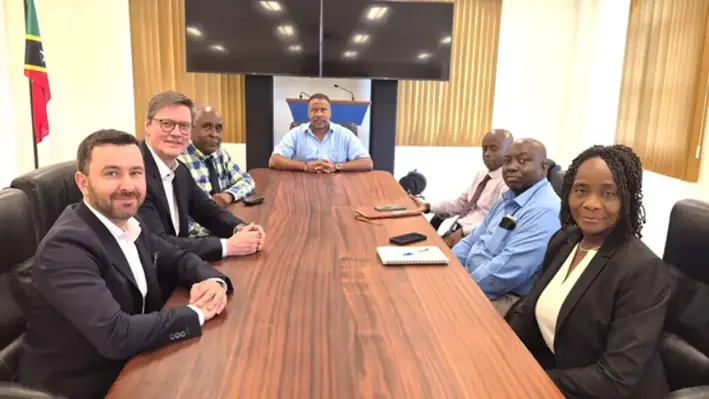
The Nevis Island Administration is advancing towards the next phase of its geothermal development following discussions with Iceland Drilling Company to finalise a contract for exploratory drilling.
- Region: North America
- Topics: Geothermal
- Date: 27th March 2026
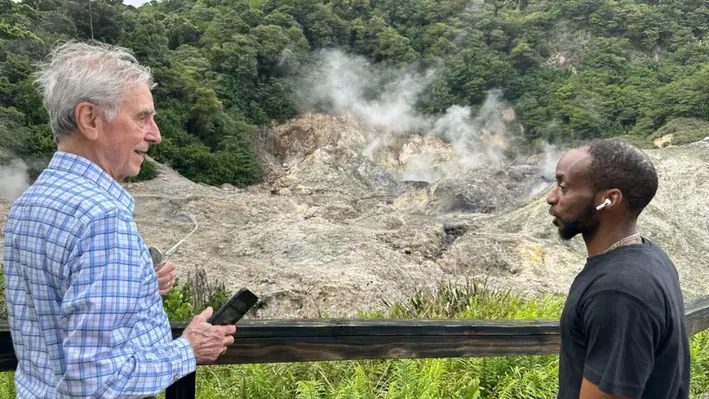
The Organisation of Eastern Caribbean States Commission has continued to provide technical assistance to the Government of Saint Lucia to support the development of drafting instructions for a Geothermal Energy Development Bill.

- Region: North America
- Topics: Geothermal
- Date: 25th March 2026
XGS Energy, a developer of next-generation geothermal power systems, is teaming up with energy technology company Baker Hughes to advance XGS’s planned 150-megawatt geothermal project in New Mexico.