
North America
North America
- Date: 13th August 2026
Project InnerSpace and the Society of Petroleum Engineers (SPE) has announced a new partnership to institutionalise geothermal as a technical focus area across SPE’s core disciplines.
InnerSpace has provided support for the partnership with a US$100,000 grant to help build upon SPE’s identification of geothermal as a one of its five core ‘Grand Challenges’. The support is designed as catalytic seed funding, providing the activation energy for a set of repeatable initiatives that can sustain and grow over the coming years, with the aim of engaging the full technical weight of the oil and gas industry.
The initiative is structured around two workstreams: Journal of Petroleum Technology, a print publication with PE articles on the technical synergies between oil and gas and geothermal; and geothermal-focused activities led by SPE Technical Directors across six disciplines – Drilling, Completions, Data Science, HSES, Production and Facilities, and Reservoir Engineering.
The grant extends a growing collaboration between SPE and InnerSpace, who are working together to develop the Geothermal Resources Management System (GRMS), a standardised resource and reserves classification framework for geothermal modelled on SPE’s Petroleum Resources Management System (PRMS).
Jamie Beard, Founder and Executive Director or Project InnerSpace, said, “The oil and gas industry, with its highly skilled workforce and technological advancements that rival those in space exploration, is poised to lead the way in developing this abundant and undervalued resource beneath us. We are proud to partner with SPE to tackle remaining challenges to industry-wide engagement.”
Chief Executive Officer at SPE, Simon Seaton, commented, “SPE’s mission is to connect technical professionals to advance the safe, responsible, and sustainable development of oil and gas and related energy resources. We are grateful for Project InnerSpace’s support and partnership in helping create new opportunities for our members to apply their expertise, collaborate across disciplines, and accelerate the growth of geothermal.”
- Region: North America
- Topics: Geothermal
- Date: 11th August 2026
Dominica’s Minister for Finance, Economic Development, Climate Resilience and Social Security Dr Irving McIntyre has said the Caribbean island “must fully explore its geothermal potential” after it commenced first production this year from a debut 10 MW power plant.
Ormat Technologies confirmed the start-up of Dominica’s geothermal power plant in its recent Q2 filings, but McIntyre noted in a budget speech on 4th August that the facility is now approaching full commercial operation after passing reliability testing.
During the first three months of commercial operation, he said the Independent Regulatory Commission will monitor geothermal performance and its effect on consumer electricity costs.
He also said this milestone shows the project is moving beyond “early commissioning difficulties,” without elaborating any further on what challenges were faced.
“As steady geothermal generation is integrated with the strengthened transmission system, it should reduce pressure on diesel generation and help limit generation-related outages,” he said.
“It will not eliminate every interruption, as distribution faults, maintenance and extreme weather will still matter, but it should make the electricity system more stable and resilient.”
Crucially, McIntyre was bullish about the project and its potential to propel other geothermal energy ventures.
“There are endless opportunities to be had from this resource including export of energy and conversion to other products.”
With this in mind, he noted, the government is “actively investigating” other sources of geothermal energy in the country, including in the north, “while actively preparing to expand its yield from the reservoirs in the Roseau Valley.”
Though geothermal will not cut energy bills overnight, he added, it will reduce exposure to imported fuel prices.
“Our investment in geothermal energy is, therefore, a strategic investment in energy security, economic resilience and Dominica’s ability to exercise greater control over its own development.”
- Region: North America
- Topics: Geothermal
- Date: 7th August 2026
A number of key geothermal projects across North America and the Caribbean helped Ormat Technologies post a strong operating performance in its Q2 results.
Announced on 5 August, the company saw 10.6% revenue growth and 20.8% gross profit growth compared to the same quarter in 2025.
In July 2026, it achieved commercial operation from its 10 MW Dominica geothermal power plant in the Caribbean, demonstrating continued execution of the company’s global development pipeline.
In June 2026, it completed the 5 MW upgrade at the Cove Fort geothermal facility in the USA, enhancing the performance and profitability of an asset it acquired in 2024.
The company reported that its energy storage business also thrived during the period with revenues in this area nearly tripling year over year.
“Our electricity segment built on its growth momentum during the quarter, driven by contributions from our Blue Mountain [Nevada] geothermal power plant acquired in June 2025, improved performance at our…Puna power plant [Hawaii], and lower curtailments in the USA compared to the prior-year period,” said Doron Blachar, Ormat’s CEO, who also referenced the company’s Olkaria project in Kenya.
Blachar also highlighted “significant progress” on Ormat’s Enhanced Geothermal System (EGS) strategy during the quarter.
“On the subsurface side, we advanced both the SLB and Sage Geosystems pilot projects toward field execution, with each partnership taking concrete steps toward commercial-scale validation,” he said.
At the Desert Peak project with SLB, it completed geophysical data acquisition, updated the subsurface model, advanced permitting and procurement of long-lead materials, and entered the final stages of vendor selection ahead of planned drilling in Q4 2026.
At the Sage Geosystems pilot, it selected a power plant in Nevada, advanced permitting activities, neared completion of procurement for drilling services and equipment and progressed engineering work to integrate the two-well EGS facility into the selected Ormat power plant.
“We are also actively working to expand our substantial geothermal land position and water rights to support future EGS development, in addition to applying for new interconnections, recognising that building a strong EGS pipeline will enable us to accelerate our project development,” said Blachar.
On the surface technology side, it also introduced its Ormega100 surface generation unit, to advance its ability to convert subsurface EGS resources into grid-scale power by connecting upstream development capabilities with downstream generation at an accelerated pace.
“Together with our growing pipeline of partnership opportunities, we anticipate that these initiatives position Ormat to accelerate the commercialisation of EGS technology and capture increasing demand for next-generation geothermal power.”
- Date: 4th August 2026
Project InnerSpace, a research organisation committed to the acceleration of geothermal energy globally, and the Society of Petroleum Engineers (SPE), the member organisation for oil and gas professionals, today announced a new partnership to bring subsurface oil and gas expertise and engineering rigour to the advancement of geothermal energy
InnerSpace provided support for the partnership with a $100,000 grant to calayse geothermal as a focus across SPE’s core technical disciplines, building on SPE's identification of geothermal as one of its five technical "Grand Challenges." It will support initiatives that can sustain and grow over the coming years within SPE, with the aim of leveraging the technical expertise of the oil and gas industry for the development of geothermal.
The initiative focuses on two key areas:
- A Journal of Petroleum Technology (JPT) geothermal technical supplement, a print publication featuring SPE articles on the technical and operational synergies between oil and gas expertise and geothermal, based on real field applications that show know-how already transferring between the two industries.
- Geothermal-focused technical activities across six core disciplines — Drilling, Completions, Data Science, Health, Safety, Environment and Sustainability (HSES), Production and Facilities, and Reservoir Engineering. They will include discipline-specific geothermal initiatives that engage professionals and student members and build cross-disciplinary ownership of geothermal inside SPE.
SPE and InnerSpace are also working together to develop the Geothermal Resources Management System (GRMS), a standardised resource and reserves classification framework for geothermal modelled on SPE's Petroleum Resources Management System (PRMS).
"The oil and gas industry, with its highly skilled workforce and technological advancements that rival those in space exploration, is poised to lead the way in developing this abundant and undervalued resource beneath us," said Jamie Beard, Founder and executive director of Project InnerSpace. "We are proud to partner with SPE to tackle remaining challenges to industry-wide engagement."
"SPE's mission is to connect technical professionals to advance the safe, responsible, and sustainable development of oil and gas and related energy resources. We are grateful for Project InnerSpace's support and partnership in helping create new opportunities for our members to apply their expertise, collaborate across disciplines, and accelerate the growth of geothermal," said Simon Seaton, chief executive officer of SPE.
The partnership positions InnerSpace and SPE as leaders in connecting oil and gas expertise to the advancement of geothermal energy, giving operators concrete technical guidance grounded in disciplines they already know, and strengthening ties between industry, academia, and technology providers.

- Region: North America
- Topics: Geothermal
- Date: 29th July 2026
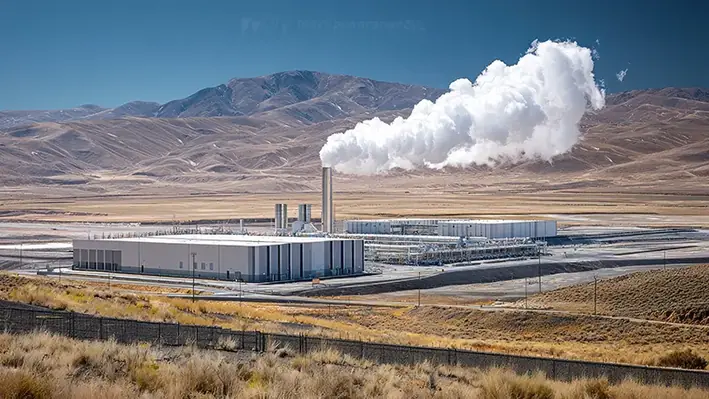
A new collaboration between Fulcrum Point Holdings and Rodatherm Energy Corporation is set to boost the development of next-generation geothermal energy projects in Utah.
- Region: North America
- Topics: Geothermal
- Date: 29th July 2026
North America’s geothermal sector is entering a major growth phase, driven by technology advances, new funding and fast-rising demand for reliable, low-carbon electricity, as well as to boost energy security.
According to recent reports from the US Department of Energy (DoE) and the National Laboratory of the Rockies (NLR), the United States currently has around 4 GW of installed geothermal capacity, primarily concentrated in California and other western states.
However, while it remains a relatively small contributor to the overall energy mix, next-generation technologies such as Enhanced Geothermal Systems (EGS), growing commercial investment and supportive policy measures are accelerating development and expanding the sector’s long-term potential.
New report reviews developments
Geothermal Transition Network has issued a new report entitled 2026 Geothermal Case Study Review: North America which:
• Examines the evolving policy and market landscape across the USA and Canada, highlighting the growing role of geothermal in supporting energy security, decarbonisation and grid resilience.
• Explores the rapid development of emerging technologies, including EGS, Advanced Geothermal Systems (AGS) and other innovative solutions that could expand the geographical reach and commercial viability of geothermal energy.
• Assesses the increasing participation of major technology companies, government agencies and institutional investors, with growing demand from data centres, military installations and corporate power purchasers helping to drive new projects.
• Discusses the financing landscape, including the emergence of large-scale project finance transactions and increasing lender confidence as geothermal moves towards becoming an established infrastructure asset class.
• Reviews the competitive landscape, profiling leading developers, technology providers, oilfield service companies and equipment suppliers supporting the industry's expansion across North America.
• Highlights Canada’s geothermal ambitions, examining the country's substantial resource potential alongside the policy, regulatory and investment challenges that must be addressed to accelerate commercial deployment.
• Identifies emerging opportunities beyond electricity generation, including hybrid renewable systems, critical mineral extraction from geothermal brines, flexible grid services and energy solutions for rapidly expanding AI-driven data centres.
The report concludes that geothermal energy is steadily transitioning from an emerging technology to a commercially scalable source of firm, always-on clean power.
While high drilling costs, resource uncertainty and permitting challenges remain significant barriers, continued technological innovation, supportive policy frameworks and expanding private investment are expected to strengthen the sector’s outlook.
If these structural challenges can be addressed, North America is well positioned to establish a robust geothermal industry capable of delivering secure, reliable and low-carbon energy for decades to come.
Download the report
The report can be downloaded here

- Region: North America
- Topics: Geothermal
- Date: 28th July 2026
IHI Power Services Corp, a leading power plant operator in the US, has been rebranded as Kyuden Energy Partners following its acquisition by Japan’s Kyuden Group.
Kyuden owns a diversified portfolio of generation, transmission and distribution assets, including nuclear, thermal, hydro, geothermal, wind, solar, battery storage and biomass.
“This is the beginning of an exciting and prolific new chapter,” said Tony Dabbene, CEO of Kyuden Energy Partners. “Kyuden International’s backing strengthens our organisation, broadens our reach and deepens the resources behind every project we take on.”
Kyuden itself is a wholly owned subsidiary of Kyushu Electric Power Company, one of Japan’s biggest electric utilities, and a cornerstone of the country’s energy infrastructure for more than 70 years.
The acquisition brings to Kyuden Energy Partners huge additional depth in terms of institutional knowledge and capital resources at a key time for the US energy market.
US electricity demand is projected to reach record highs in 2026, driven by an AI-fuelled surge in data centre construction forecasted to more than double grid power needs by 2027, according to Goldman Sachs Research.
Ageing infrastructure and accelerating renewable integration are also straining grid reliability, and per the Electric Power Research Institute (EPRI), data centres alone could consume up to 9% of total US electricity generation by 2030, up from just 4% in 2023.
Geothermal energy is seen as a potential solution to this growing need, among many other energy solutions.
A Kyuden Energy Partners statement said that its formation reflects growing international confidence in the US power sector with foreign direct investment into US utilities reaching US$16bn in 2024.
“For Kyuden International, this goes beyond capital deployment — it is a deliberate, long-term commitment to the American energy market, and the Kyuden Group's first dedicated investment in US operations and maintenance (O&M),” the statement read.
“It is a signal that the future of energy infrastructure will be shaped by partnerships that cross borders."
IPSC came into thenew alliance with one of the most versatile O&M platforms in the country, managing a diverse portfolio of natural gas, biomass, hydro, coal, battery energy storage systems (BESS), wind, solar facilities and more.
Capabilities run the gamut from O&M to asset management, regulatory compliance and technical support across every phase of power generation, from construction through decommissioning.
“The United States sits at the centre of the global energy transformation, and Kyuden Energy Partners gives Kyuden International a truly exceptional platform from which to grow and contribute,” said Takashi Mitsuyoshi, CEO of Kyuden International Corporation and Executive Officer of Kyushu Electric Power Company.
“We bring the operational precision and strategic discipline of the Kyuden Group to a team that has already proven itself as one of the most trusted power plant operators in America. This represents our first investment in an O&M business in the United States, and with it, we are committed to building a dynamic, long-standing partnership designed for the power generation demands of the future and to empowering Kyuden Energy Partners to reach its full potential."

- Region: North America
- Topics: Geothermal
- Date: 23rd July 2026
XGS Energy has appointed two new senior leaders to help deliver key geothermal infrastructure projects across the US.

- Region: North America
- Topics: Geothermal
- Date: 23rd July 2026
Legislation led by Colorado Democrats will take effect on August 12th to make energy and utility costs more affordable for families by improving energy assistance programmes and boosting geothermal development.

- Region: North America
- Topics: Geothermal
- Date: 17th July 2026
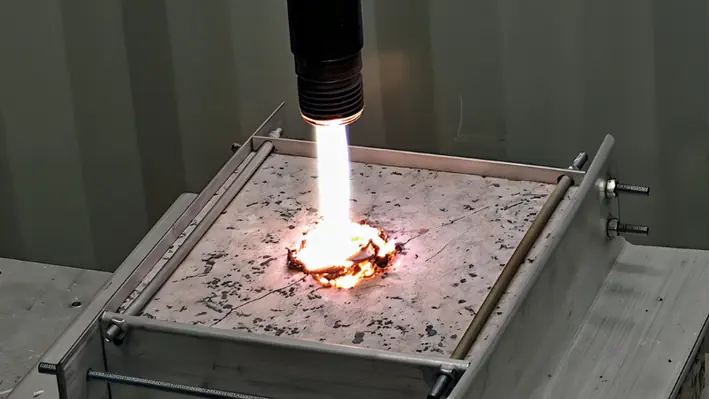
Kaishan USA, a major producer of air compressors, has unveiled Terravanta Power Systems, its new geothermal power generation company, during a groundbreaking ceremony for a manufacturing site in Loxley, Alabama.
- Region: North America
- Topics: Geothermal
- Date: 15th July 2026
Japan's largest power generation company, JERA Co., Inc. (JERA) has spoken up on its recent investment in Houston-based Quaise Energy, a growth-stage developer of next-generation superhot geothermal technology.

- Date: 8th July 2026
Dandelion Energy, the geothermal heating and cooling solutions provider, has announced two new homebuilder partnerships with Dream Finders Homes and Ward Communities, with the projects having been awarded US$1.3mn in funding from the Maryland Energy Administration.