
North America
North America

- Region: North America
- Topics: Geothermal
- Date: 8th July 2026
Eavor Technologies has been awarded US$8mn from the Government of Alberta’s Technology Innovation and Emissions Reduction (TIER) fund to support the Eavor-Jules project.
- Region: North America
- Topics: Geothermal
- Date: 8th July 2026
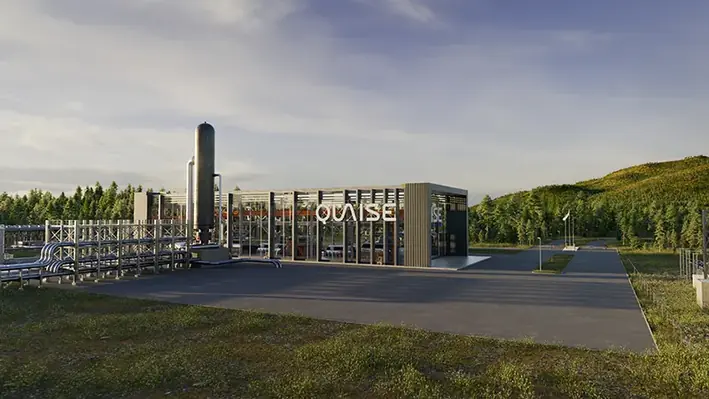
Quaise Energy has raised US$134mn in the initial close of its Series B financing round as it looks to build what it says will be the world’s first commercial superhot geothermal power plant and advance its millimeter wave drilling technology.
“Our ambition is to power civilisation with Earth’s most compelling energy source,” said Carlos Araque, the company’s CEO and President. “This round takes us from field-proven technology to first commercial revenues.”
The Series B financing brings its total funding raised to date to US$230mn.The proceeds will be used to develop Project Obsidian in Central Oregon and continue advancing the company’s millimeter wave drilling system to depths exceeding five kilometres.
The Houston-based company reported that the latest funding round was led by Prelude Ventures, with strategic investments from JERA Co., Inc. and Idemitsu Kosan, two of Japan's largest energy companies.
Nearly all existing investors, including Safar Partners, also participated, it added.
In a statement, Quaise said additional equity and debt financing is expected to close soon, adding further financial firepower to its commercialisation plans.
The company’s drilling technology, developed at the Massachusetts Institute of Technology, uses millimeter waves to ablate rock at depths and temperatures beyond the reach of conventional drilling methods.
Quaise said the approach could access rock temperatures between 300°C and 500°C, allowing geothermal systems capable of rivaling fossil fuel and nuclear power in energy density while matching renewable energy costs.
The company has drilled more than 100 metres through granite at its Central Texas field site in 2025 and is now approaching one kilometre in depth.
According to the Quaise statement, reaching that milestone would represent the deepest penetration achieved using millimeter wave drilling and the deepest ever recorded by any non-contact drilling technology.
Project Obsidian is currently under construction on federal geothermal leases in Oregon’s Deschutes National Forest.
The company believes the project has gigawatt-scale potential and hopes to deliver electricity to the grid by 2030.
Mark Cupta, Managing Director at Prelude Ventures, which supported the latest fundraiser, said the project demonstrates the company’s progress toward commercial deployment.
“What the team has achieved in the field and what they are now building at Project Obsidian validates that conviction, and we are proud to continue supporting Quaise as they move from proving the technology to powering the grid with clean, reliable energy nearly anywhere on Earth,” he said.
- Region: North America
- Topics: Geothermal
- Date: 7th July 2026
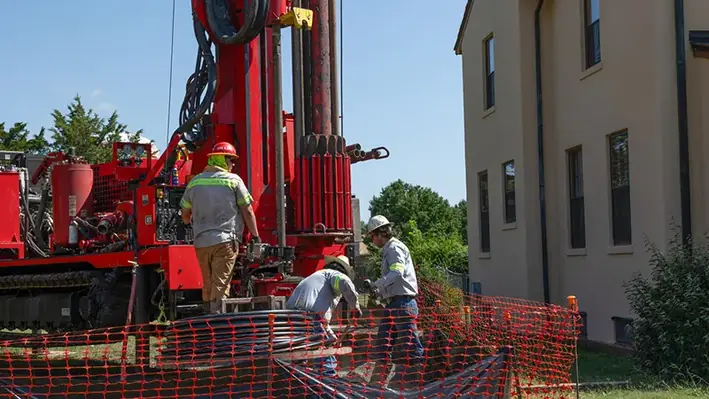
A US$63mn geothermal energy project at Fort Sill in Oklahoma is set to transform 1,700 military family homes, demonstrating how ground-source heat pump technology can reduce energy consumption while improving comfort and resilience.
It reflects a rise in interest among the US military in utilising geothermal energy at some of its domestic bases and facilities.
Led by Corvias, the programme will install high-efficiency geothermal heat pumps alongside smart thermostats, upgraded hot water systems and advanced building controls.
The company expects the improvements to reduce annual energy use across the housing community by 57%, delivering more than US$5mn in annual savings.
Corvias Executive Vice President of Investment Management Kyle Miller said the initiative reflects the broader strategy to deploy innovative infrastructure solutions across military communities.
“This project reflects our commitment to innovating at scale for the betterment of military families,” said Miller.
“Through our expanded partner network and Solutions Through Partnerships approach, we are able to address some of the military's most pressing infrastructure and quality of life challenges.”
The project was recently showcased to US Army leaders, congressional representatives and industry partners, who toured manufacturing facilities, drilling operations and completed homes to see the technology in action.
The geothermal systems use stable underground temperatures to provide heating and cooling, reducing HVAC energy consumption by between 40% and 70% compared with conventional systems.
The upgraded homes also incorporate AI-enabled controls that support predictive maintenance, helping improve reliability while reducing maintenance requirements.
The Fort Sill project is being delivered through an Energy Savings Performance Contract (ESPC), allowing the infrastructure improvements to be financed through future energy savings rather than upfront public funding.
Corvias estimates ESPC projects across its portfolio will generate approximately US$61mn in annual savings and more than US$1.7bn over their lifetime.
As one of the largest residential geothermal deployments in US military housing, the Fort Sill project could provide a blueprint for wider adoption of ground-source heat pump technology at military installations and other large residential communities seeking to improve energy efficiency and long-term resilience.
“As we leverage advanced technologies and partnerships to build a more resilient Fort Sill, it is essential for our collective teams to be synchronized through this process to rapidly deliver the enhanced homes our military families deserve and to generate critical savings that can be reinvested back into Fort Sill and our people,” said US Army Col. John Morgan, Fort Sill garrison commander.
- Region: North America
- Topics: Geothermal
- Date: 2nd July 2026
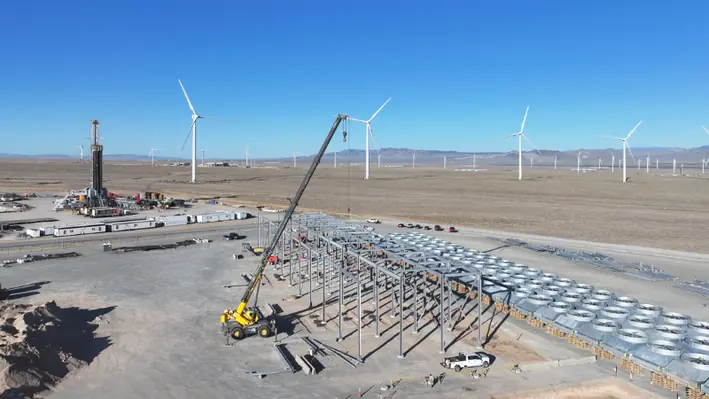
Fervo Energy, NVIDIA, and the Pacific Northwest National Laboratory (PNNL) have reached an agreement to develop a next-generation digital twin platform for EGS technology, known as EGS-Twin.

- Region: North America
- Topics: Geothermal
- Date: 2nd July 2026
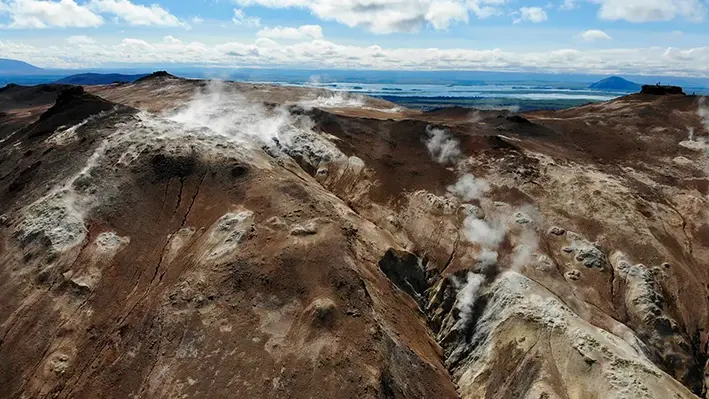
The Bureau of Land Management has authorised the Pearl Geothermal Development Project on the public lands of Esmeralda County in Nevada, using an accelerated 14-day environmental review process.
- Date: 30th June 2026
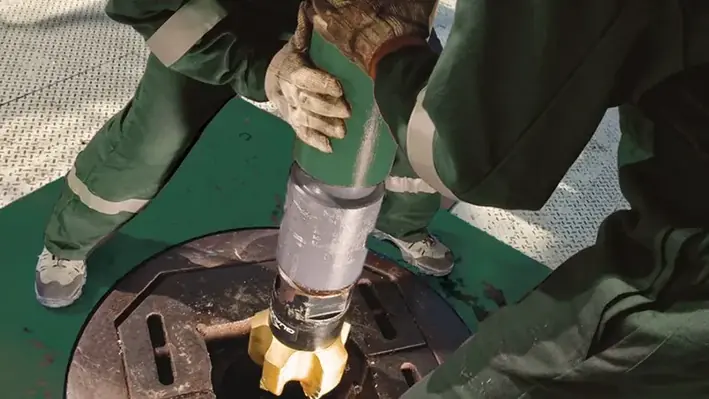
The USA Department of Commerce’s CHIPS Research & Development Office has signed an agreement with I-Pulse for a US$250 million CHIPS R&D award to advance U.S. technology leadership and innovation in novel silicon carbide (SiC) power semiconductors that can operate in extremely harsh environments.
I-Pulse will develop next-generation SiC semiconductors for high-temperature, high-current, high voltage solid-state switches in partnership with industry-leading Federal Laboratories, universities and specialised manufacturers.
By deploying SiC-based power electronics in pulsed-power drills, geothermal and critical minerals mining, drilling can be done more efficiently than conventional methodologies, and at a lower cost.
I-Pulse’s proprietary semiconductor and pulsed-power drilling technology will unlock significant untapped resources of geothermal power within the United States, enabling the next-generation of advanced geothermal power plants in America’s massive hot dry granite formations.
I-Pulse’s silicon-carbide switches will enable unparalleled drilling performance in high-temperature rock conditions. I-Pulse employs high-voltage switches to apply extremely high-power electrical pulses to hot granites and other geothermal formations. These powerful electrical pulses fracture and soften the rock ahead of the drill bit, multiplying drilling speed and vastly extending the life of the drill bit.
“With today’s announced investment, the Trump Administration is strengthening America’s capabilities and enhancing its national and energy security goals,” said Secretary of Commerce, Howard Lutnick.
“I-Pulse's next-generation silicon carbide-based technology is a game-changer for operations in extreme environments," said Bill Frauenhofer, executive director for Semiconductor Investment and Innovation at the Department of Commerce. "I-Pulse’s high-power, high-frequency switches and packaging are engineered to withstand harsh shocks and temperatures, empowering critical industries to push past previous technical limits.”
As part of the deal, the Department of Commerce also received a minority, non-controlling equity stake in I-Pulse, a private US company set up to bring high pulsed-power technology into civilian sectors.
- Region: North America
- Topics: Geothermal
- Date: 25th June 2026
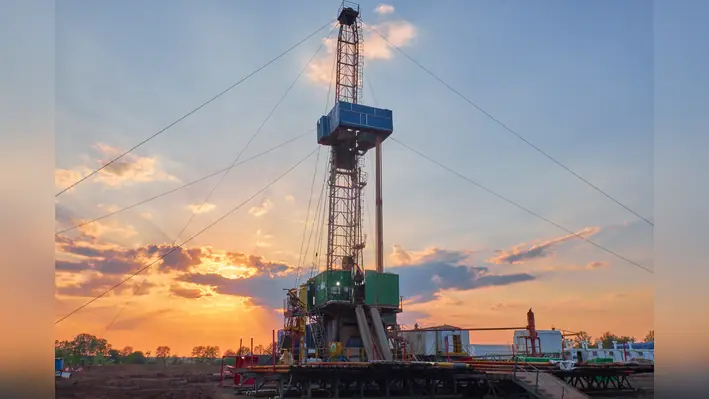
Baker Hughes and Mantle Reach Power have signed a strategic agreement aimed at accelerating the deployment of large-scale geothermal energy projects across North America, with plans targeting up to 500 MW of installed capacity over the next five years.
The collaboration brings together Baker Hughes’ energy technology portfolio and Mantle Reach Power’s geothermal development expertise, supported by EnCap Energy Transition Fund III.
The companies say the agreement is designed to address longstanding challenges that have limited geothermal’s growth, particularly around project financing, risk allocation and pre-construction bankability.
It also reflects mounting interest in the geothermal space among the major traditional oil and gas service industry giants.
Under the arrangement, Baker Hughes will serve as an integrated subsurface solutions provider, while Mantle Reach Power will lead project development, ownership and financing.
The partners believe the model will help streamline project execution and create a repeatable framework for scaling geothermal energy deployment.
Lorenzo Simonelli, Chairman and CEO of Baker Hughes, said the agreement represents a significant step forward for the sector.
“Geothermal is a clean power solution that is proving to be a vital contributor to advancing sustainable energy development, with incredible potential to enhance U.S. energy security, support digital infrastructure, and ensure energy remains accessible and affordable,” he said.
“Today’s announcement celebrates the commercial architecture the industry has been missing: a repeatable, financeable model that can be deployed at the speed and scale to meet global energy demands.”
The agreement comes amid growing demand for reliable, around-the-clock power driven by electrification, artificial intelligence and hyperscale computing.
The companies believe geothermal energy is well placed to provide clean, firm baseload power to support these and other emerging needs.
As projects advance, Baker Hughes expects to provide a range of subsurface technologies, surface power generation systems and digital solutions intended to reduce development risk and support the delivery of geothermal power at an industrial scale.
Tim Rebhorn, Managing Partner at EnCap Energy Transition, said the partnership also tackles key barriers that have historically constrained investment in geothermal projects.
“By aligning development capital, project finance expertise and world-class technology, this collaboration addresses the fundamental challenges that have prevented large amounts of private capital from participating in geothermal deployment,” he said.
Nick Karambelas, CEO of Mantle Reach Power, added that the structure would help unlock conventional project financing and support the company's own expansion as an independent power producer.
“Integrating Baker Hughes’ subsurface-to-surface expertise with our capabilities in project development, finance and execution positions Mantle Reach Power to commercialise geothermal assets at scale,” said Karambelas.
- Date: 23rd June 2026
Gradient Geothermal, a leader in modular geothermal power and thermal management solutions, has teamed up with T5 Smackover Partners to advance integrated geothermal and lithium production in East Texas by providing its patented HXC Geothermal System for T5's phase one integrated geothermal project.
T5 Smackover Partners is a vertically integrated energy company in the Texas Smackover region — a resource basin with some of the highest brine reservoir temperatures and mineral concentrations in the Americas. Its mission is to expand geothermal baseload energy projects production and clean lithium extraction.
The collaboration brings together Gradient's modular geothermal technology and T5 Smackover Partners' integrated approach to developing geothermal energy from the Smackover Formation's geothermal brines.
Gradient's HXC Geothermal System will utilise the thermal energy contained in the project's produced working fluid brine, providing an integrated solution that supports both heat management and geothermal power generation. By combining geothermal power technology with direct lithium extraction, the project represents a new model for producing critical minerals while producing baseload electrons and reducing the development's overall environmental footprint, delivering reliable energy, strengthening U.S. critical-mineral supply chains and creating economic value for East Texas communities.
"This project demonstrates what is possible when geothermal energy, geothermal brines, and critical-mineral production are designed as one integrated system," said Ben Burke, Chief Executive Officer of Gradient Geothermal. "T5 is developing an innovative energy project, and we are proud that Gradient's HXC technology will help convert the Smackover's substantial subsurface heat into a productive baseload energy resource."
"We believe the future of the Smackover is about maximizing the value of the geothermal brine it can produce," said Cole Fisher, President and Co-Founder of T5 Smackover Partners. "By integrating Gradient's modular geothermal technology alongside our phase one production, we're creating a more efficient project that generates both baseload electricity from the same resource. This is exactly the type of innovation needed to strengthen domestic supply chains and establish East Texas as a leader in the next generation of geothermal energy."

- Region: North America
- Topics: Geothermal
- Date: 17th June 2026
Seattle-based Endurance Energy has completed a US$54mn fundraiser to progress its plans to develop subsea geothermal power.
The company announced a US$54mn Series A fundraising, led by Founders Fund, in a post published on its Linkedin social media account.
“Our subsea geothermal systems are engineered to deliver gigawatts of always-on, zero-emission power, faster and cheaper than conventional sources,” the statement noted.
“This funding enables us to transition from prototype to full-stack systems and scale our offshore operational capability.”
Alongside Founders Fund, it welcomed new investment from Felicis, Voyager Ventures, Riot Ventures and Construct Capital, as well as continued support from Point72 Ventures, First Round Capital and Ascend.
Presenting its case for subsea geothermal, it noted that most of the world's baseload power still comes from burning fossil fuel, with demand set to climb sharply as AI and re-industrialisation come online.
For many coastal regions around the Pacific, it noted, offshore geothermal represents a completely untapped source of firm, clean power, abundant enough to displace imported diesel and carry baseload at multi-gigawatt scale.
Despite the complexities and challenges involved, it offers a real, long-term solution to rising energy demands.
“Mating a generator to an over 300°C drilled well, holding it on the seafloor for years at a time at depth and pressure, and recovering it for service is hard, but none of it requires new physics,” the company said in its statement.
“The drilling, turbines, and subsea hardware all exist in adjacent industries, and Endurance is integrating them into a single unit you can deploy, operate, and recover on the seafloor.”
It also referenced its “SpaceX heritage” which enables a pace of development that is “unprecedented” for new energy projects.
“In just the past year, we've completed four prototype deployments to deep sea volcanic systems at depths up to 3,300 metres and hydrothermal temperatures up to 386°C, and we're on track to deploy our 100kW 'Adelie' generator to the Juan de Fuca ridge this Fall,” the company said.
Adelie is its first end-to-end system: drilling, generation and offtake in a single deployable unit, powering a co-located subsea compute module and connected to shore via fibre optic cable.
“We build, deploy, learn from real-ocean conditions, and turn the hardware around faster every cycle, with a line of sight to delivering power to the grid in the next two years.”
From its Seattle base, on the north Lake Union waterfront, it can load seafloor drills and generators directly onto vessels that carry them to sea and to where they are required.
In its statement, it also referenced the Endurance Energy leadership team that has scaled multi-billion dollar businesses, built leading-edge energy projects and implemented national energy policy and called on others to join what it termed “a well-capitalised, world-changing energy project with a profoundly kind and talented team operating at full-tilt.”
- Region: North America
- Topics: Geothermal
- Date: 15th June 2026
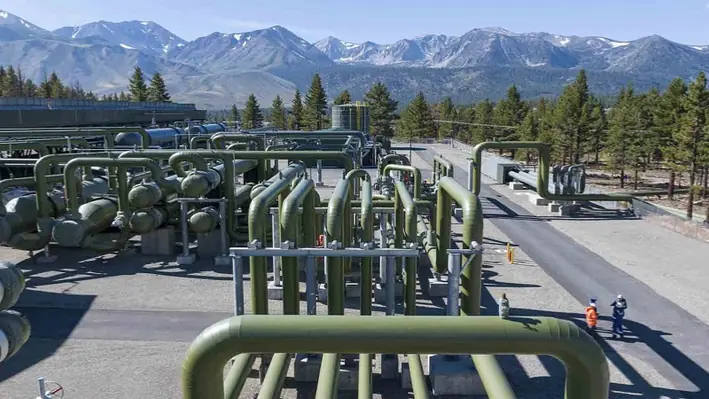
Seequent, The Bentley Subsurface Company, and the Cascade Institute have announced a collaboration to develop a state-of-the-art model — The Canadian Thermal Model — aimed at further understanding the nation’s geothermal potential.
The model will integrate over 20 input layers of geoscientific data related to geothermal energy to evaluate Canada’s nationwide deep heat resources, the group said in a statement.
“Canada has a significant opportunity to advance geothermal when the need for reliable, always-on clean energy has never been greater,” said Jeremy O’Brien, Energy Segment Director, Seequent.
“Realising that potential starts with greater subsurface certainty and making data accessible to key stakeholders. Combining this access with best-in-class geophysics enables more accurate mapping of heat at depth. The Canadian Thermal Model brings these elements together to create a national view of deep geothermal resources, helping to reduce risk, guide investment, and accelerate development.”
As investment in geothermal energy surges globally as a reliable, always-on clean power source, the Canadian Thermal Model aims to create a comprehensive national view of deep heat resources using novel machine learning methods to address a long-standing challenge for the sector: limited subsurface data coverage.
Seequent is providing access to its world-leading geophysics software to accelerate research into the Earth’s subsurface.
This initiative advances knowledge of Canada’s geothermal energy reserves by integrating geologic and geophysical datasets into InterPIGNN machine learning algorithm for deep heat modelling.
By improving confidence in where geothermal resources are located, the model provides a critical foundation to inform investment, policy planning, and project development nationwide.
The Cascade Institute, a think tank at Royal Roads University, will lead the project through its Deep Geothermal programme.
“Canada has world-class subsurface expertise and a growing opportunity to lead in geothermal,” said Thomas Homer-Dixon, Executive Director of the Cascade Institute.
“This project will provide a foundational resource to demonstrate the technical and economic viability of geothermal energy at scale.”
The Canadian Thermal Model reflects a broader industry shift toward data-driven geothermal development, including next-generation technologies and national-scale resource assessment.
It also underscores the growing importance of partnerships between research institutions, technology providers and the wider energy sector to scale geothermal from opportunity to infrastructure.
Seequent supports more than 60% of the world’s geothermal power generation, with experience spanning next-generation projects such as Fervo Energy’s Cape Station in Utah, and long-established operations including Ormat’s global footprint, reflecting deep expertise that drives the sector forward.
- Date: 11th June 2026
Ormat Technologies has introduced Ormega100, a revolutionary new surface power generation unit designed to deliver higher output than other binary solutions currently on the market, marking an accelerated opportunity to commercialise and scale its EGS developments.
- Region: North America
- Topics: Geothermal
- Date: 11th June 2026
Fervo Energy has promoted Sarah Jewett to Chief Operating Officer, where she will take leadership of the company’s corporate operations and help create the infrastructure required to execute ‘the most significant commercial opportunity for clean, firm power in history’.