
Latest News
Latest News

- Region: Europe
- Topics: Geothermal
- Date: 23 October, 2025
The Renewable Energy Association (REA) and Geothermal Energy Advancement Association (GEAA) have announced plans to create a new, dedicated platform within the REA — the Geothermal Energy Forum (GEF) — to help drive growth in the sector.
Both organisations have agreed Heads of Terms for the acquisition of GEAA by the REA which it is hoped will be completed by the end of the year.
In a statement, REA said the strategic acquisition marks a “major step forward” for the UK’s geothermal sector.
“By bringing GEAA’s expertise and membership into the REA, the Geothermal Energy Forum will help unify the industry’s voice and strengthen engagement with government, policymakers and key stakeholders – accelerating the growth of geothermal energy in the UK,” the statement read.
GEAA has been one of the key geothermal bodies, and the only UK trade association solely dedicated to geothermal energy.
Its integration into the REA reflects growing confidence in the sector and in the REA’s role in helping to galvanise movement in this market.
"This move establishes a powerful new platform to help unlock the UK’s exciting geothermal potential,” said Trevor Hutchings, CEO of the REA.
“Whether that’s for clean sources of heat for homes and businesses, or new low carbon power generation – geothermal has an important and currently under-valued role to play.”
He added: “I am determined that by the REA and GEAA coming together in this way we can ensure that geothermal energy plays a key role in the UK’s journey to greater energy security, energy sovereignty, local jobs and lower emissions.”
Karl Farrow, Founder and CEO of CeraPhi Energy, and Chair of GEAA, highlighted how far the industry had moved in just a few years.
“We started GEAA over a kitchen table in the midst of Covid nearly five years ago, at that time there was no designated UK voice for geothermal. We have slowly built a framework around a group of passionate individuals and organisations – big and small from academia to industry – who have come on that journey with us, building GEAA into a solid membership base and internationally recognised association,” Farrow said.
“We now need a ‘bigger table’ and evolving GEAA into the geothermal arm of the REA as the Geothermal Energy Forum is a natural next step for GEAA and its members.”
Industry players have also been broadly supportive of the coming together.
“This sort of coalition building is critical for the UK geothermal sector,” said Ross Glover, CEO of Star Energy. “We are excited to play our role in the Geothermal Energy Forum and actively participate in shaping key policy engagements with the government.”
That sentiment was shared by Karen Spenley, UK Country Manager of Celsius Energy.
“It’s encouraging to see the REA acknowledge the need for the geothermal sector to find a unified voice to grow and thrive,”said Spenley. “As an underutilised energy source in the UK, we look forward to seeing how the GEF drives awareness, investment and policy development across all aspects of geothermal energy, enabling it to play a greater role in energy resilience and decarbonisation.”
Jon Gluyas, Board Member, National Geothermal Centre (NGC), also welcomed the news.
“It will strengthen and deepen the already great relationship between the NGC and the REA, and together we will continue to support the nascent UK geothermal industry and advocate for appropriate policies from government to improve energy security, energy sustainability and energy equity.”
- Region: Asia Pacific
- Topics: Geothermal
- Date: 21 October, 2025
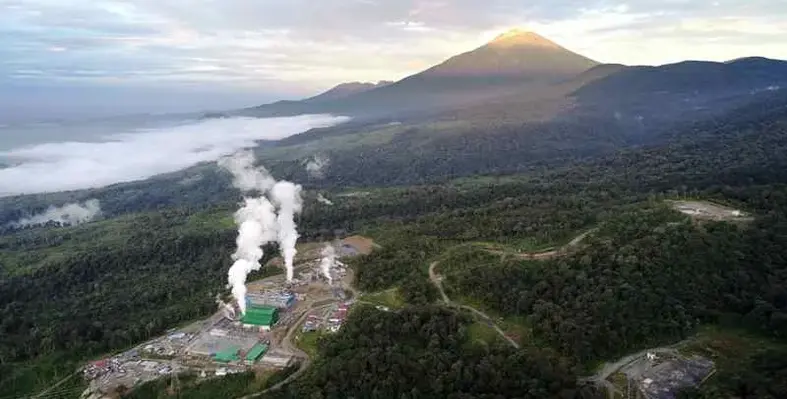
PT Supreme Energy Muara Laboh (PT SEML), a joint venture between PT Supreme Energy Sumatera, Sumitomo Corporation, and INPEX GEOTHERMAL, LTD., has commenced the development phase of the Muara Laboh Geothermal Power Plant (GPP) Unit 2 in West Sumatra, Indonesia.
- Region: North America
- Topics: Geothermal
- Date: 20 October, 2025
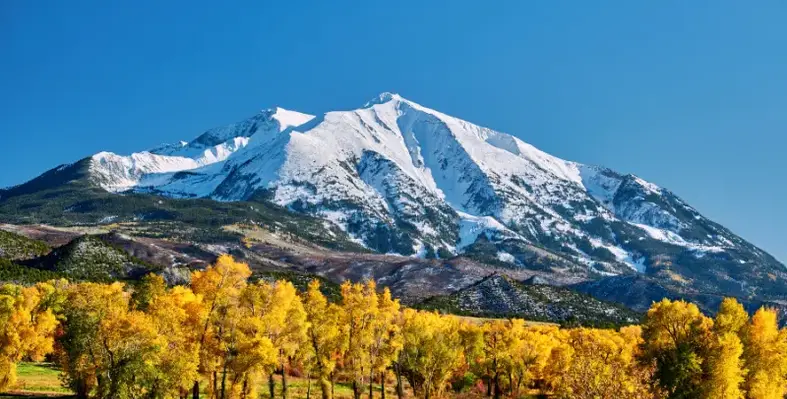
The Colorado Energy Office has announced US$7.3mn in awards through the third cycle of the Colorado Geothermal Energy Tax Credit Offering (GETCO).

- Region: North America
- Topics: Geothermal
- Date: 17 October, 2025
A new coalition, the Canadian Deep Geothermal Coalition, has been officially formed to propel Canada to the forefront of the global geothermal energy landscape.

- Region: Asia Pacific
- Topics: Geothermal
- Date: 17 October, 2025
H.E President Halla Tómasdóttir of Iceland and President Xi Jinping reaffirmed their commitment to advancing geothermal cooperation this week, stating the renewable source is a cornerstone of future partnership.
- Region: Europe
- Topics: Geothermal
- Date: 14th October 2025
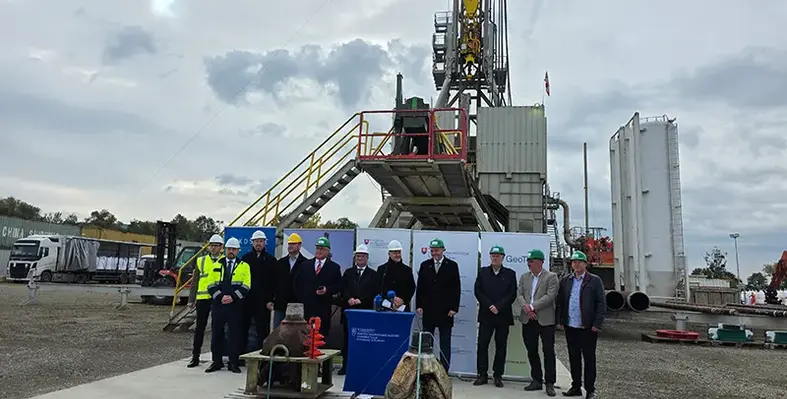
After three decades of planning, Košice is set to begin its long-awaited geothermal energy project today.
- Region: North America
- Topics: Geothermal
- Date: 14th October 2025
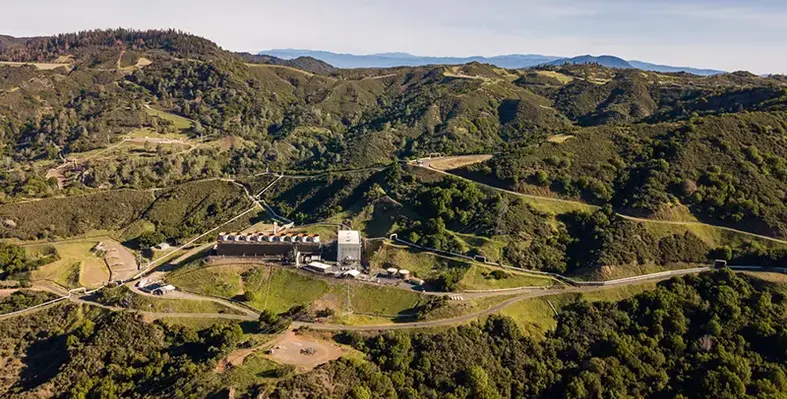
Calpine Corporation this week marked the 65th anniversary of The Geysers, one of the world's largest and most productive geothermal energy sites.
The milestone reflects more than six decades of innovation, partnership and sustainable power generation in Northern California, the company said in a media release.
Calpine Corporation is America's largest generator of electricity from natural gas and geothermal resources with operations in competitive power markets.
Since commercial operations began in 1960, The Geysers has been at the forefront of California's energy transformation, producing reliable, around-the-clock renewable power using steam heated by the Earth's core.
Today, Calpine's 13 geothermal power plants across the 45-square-mile terrain generate enough renewable electricity to power approximately 725,000 homes annually.
“The success of The Geysers over the past 65 years is a testament to the people who have cared for it: hardworking, committed individuals who view stewardship as both a duty and a privilege,” said Aimee Blaine, Calpine's Senior Vice President, Geothermal Region.
Calpine has nearly 300 employees and 150 contractors who live and work in Lake and Sonoma Counties, who have helped make The Geysers a “global model for responsible geothermal development” and a cornerstone of California's renewable energy portfolio, the company stated.
“Together with our partners and community, we have built a deep connection to each other and this land,” said Blaine.
“Our shared pride in this work has helped The Geysers remain a global leader in geothermal energy production and environmental responsibility."
To commemorate the milestone, Calpine donated US$65,000 to the Clear Lake Environmental Research Centre (CLERC), a community-based non-profit focused on protecting and restoring the Clear Lake watershed and surrounding ecosystems.
Working across Lake and Sonoma Counties, CLERC coordinates wildfire prevention and habitat restoration efforts.It also brings together science, education and collaboration with local partners and tribes to build a more resilient and sustainable future for Northern California.
California State Senate President pro Tempore Mike McGuire called The Geysers a genuine feat of engineering and dedication.
“And Calpine's commitment to expanding renewable energy while protecting our natural resources is proof that innovation and sustainability are perfect partners in the world's fourth-largest economy.”
He added: “65 years is an incredible milestone for geothermal energy here in Lake and Sonoma counties, and we all look forward to what's ahead as the iconic Geysers continue to help shape California's transition to clean energy for the next generation.”
- Region: North America
- Topics: Geothermal
- Date: 13 October, 2025
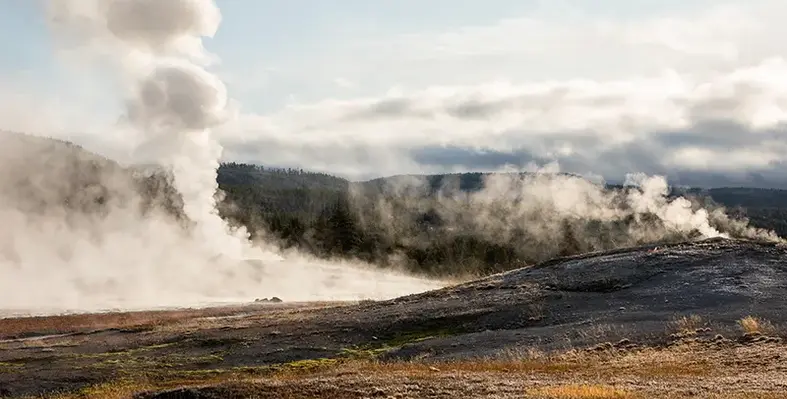
Geothermal energy in North America is undergoing a transformative moment.
- Region: Europe
- Topics: Geothermal
- Date: 10 October, 2025
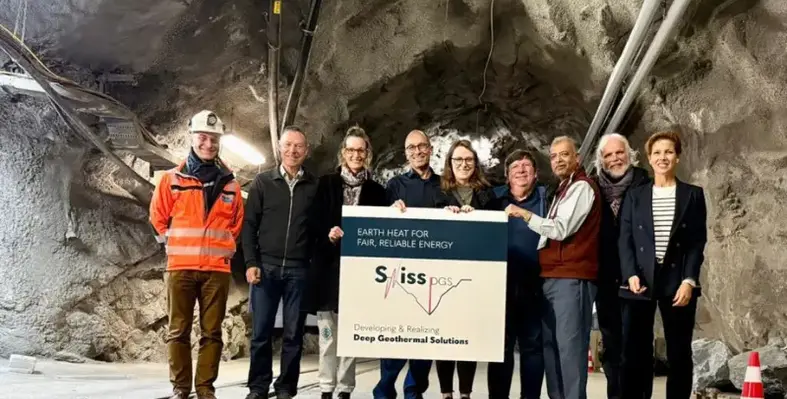
Under the new agreement, Halliburton will conduct a subsurface feasibility study to help accelerate the deployment of EAPOSYS Advanced Geothermal Systems (AGS), to help contribute to the industrialisation of EAPOSYS’ engineering and well design.
- Region: ASIA PACIFIC
- Topics: Geothermal
- Date: 8 October, 2025
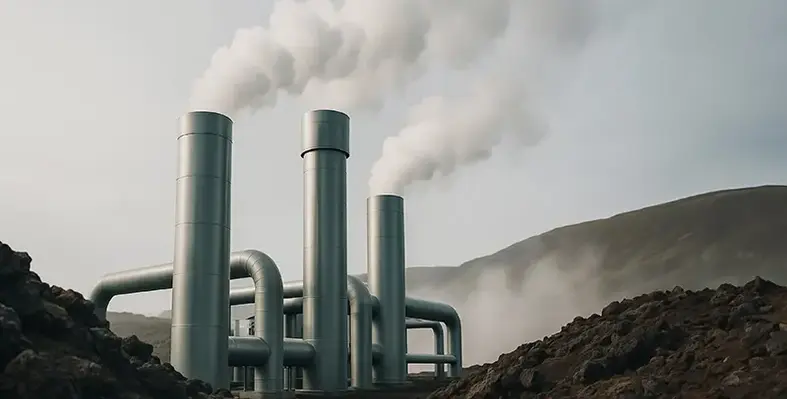
The Ministry of New and Renewable Energy (MNRE) has unveiled a pioneering national policy aimed at unlocking India’s geothermal energy potential.
- Region: Asia Pacific
- Topics: Geothermal
- Date: 7 October, 2025
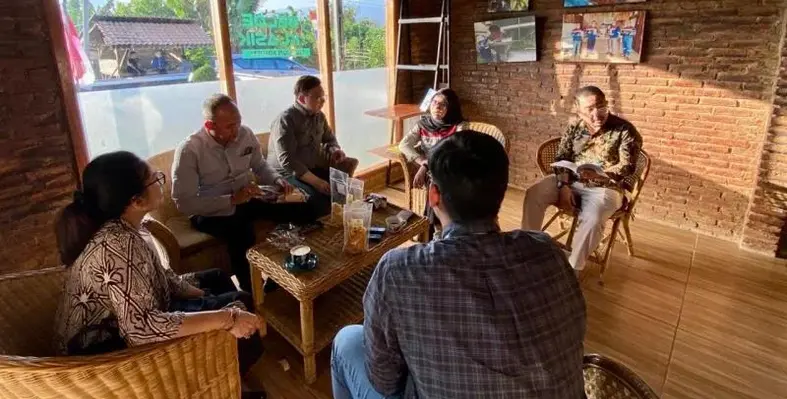
PT Pertamina Geothermal Energy Tbk’s Ulubelu Area was selected as a national case study for the Water-Energy-Food (WEF) Nexus project, recognised for successfully delivering green electricity through an environmentally friendly system, empowering farmers, boosting the local economy, and preserving the environment.

- Region: Asia Pacific
- Topics: Geothermal
- Date: 6 October, 2025
Project InnerSpace, a nonprofit promoting global geothermal energy, has launched its GeoFund initiative in India with the Tapri Geothermal Cold Storage Project in Himachal Pradesh.
Led by Geotropy, the pilot project uses geothermal energy to power a 500-tonne cold storage and crop drying facility for local apple farmers.
It aims to reduce post-harvest losses, increase farmer incomes, and boost local employment.
Jamie Beard, executive director of Project InnerSpace, said the Tapri project serves as a model for sustainable agriculture and rural development, with similar initiatives planned across the Asia region and beyond — it also represents an endorsement of geothermal energy.
“A widely recognised barrier to the rapid expansion of geothermal energy is the lack of pilot projects to demonstrate impact across different technologies, applications, geologists and geographies globally, where it can be most influential in economic development, energy security and prosperity,” he commented.
“The Tapri pilot project will tackle one of India's most important agricultural challenges, increase revenues and be a global model. We look forward to supporting the Geotropy team in the development of this important project.”
GeoFund was set up to support scalable, high-impact geothermal pilots that traditional financing alternatives may overlook.
With the Tapri pilot project, it is having a direct impact on an industry of vital strategic significance to livelihoods in the area.
The new cold storage facility will provide 500 tonnes of storage and fruit dehydration capacity, helping farmers maintain quality, reduce wastage and sell at premium prices.
The project will also boost local economic growth by creating employment at the local level, reducing crop loss, and generating more predictable revenue sources for farmers and workers.
“This project is more than just a cold storage unit — its purpose is to ensure that our community can develop economically by using its geothermal capacity,” said GeoTropy CEO, Vijay Chauhan.
“Our farmers are already understanding the importance of this work, and now people are waiting to use the facilities available to us.”