
Europe
Europe
- Region: Europe
- Topics: Geothermal
- Date: 16th July 2026
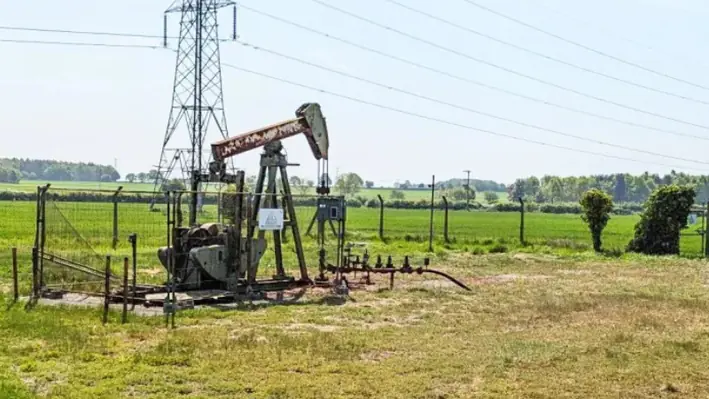
CeraPhi Energy has announced the signing of a strategic agreement with Star Energy that will enable the transition of legacy oil and gas wells into geothermal energy centres across the UK.
- Region: Europe
- Topics: Geothermal
- Date: 9th July 2026
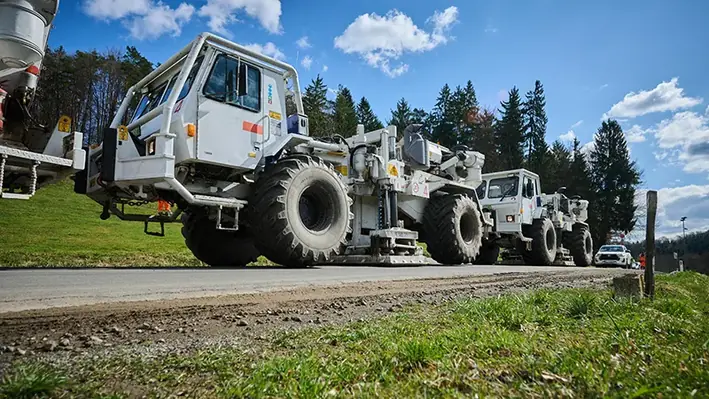
OMV and Energie Steiermark are teaming up to advance their deep geothermal energy project in Styria, southeastern Austria
At a joint event, the two companies presented ‘Tiefenkraft’ — an initiative to assess the region’s geothermal potential.
In the long term, this could deliver up to 670 GWh of geothermal energy annually by 2037, equivalent to around 50% of the district heating supply in the greater Graz area.
Crucially, the project is set to move into its next phase, with exploration drilling planned for late 2026, bringing a major geothermal heating source for Graz closer to reality.
Between February and April 2026, a seismic survey was carried out along 900 km of roads used as measurement lines. The data will form the basis for a detailed subsurface model as well as for the next project phases.
Berislav Gašo, OMV Executive Vice President Energy, said harnessing geothermal energy is key to securing an independent, climate-neutral heat supply in Austria.
“With our expertise in geology, drilling technology and project development, we are making a vital contribution to a joint assessment of the region’s geothermal potential with Energie Steiermark and helping lay the foundation for a sustainable heat supply.”
The next major step is a planned exploration well, Petersdorf 2, in St. Marein near Graz, with drilling expected to begin in the fourth quarter of 2026.
Preparatory work will begin in September 2026, with drilling currently scheduled to begin by the end of the year, subject to permitting and the completion of the drilling site construction.
The drilling and subsequent testing phase are expected to take around three to four months and will provide further insights into the geothermal potential and geological conditions.
If the results are positive, the next investment decision will cover the development of a first geothermal doublet — comprising one production and one injection well — along with comprehensive testing.
In parallel, two possible additional wells are planned to assess the feasibility of an Aquifer Thermal Energy Storage (ATES) system, enabling surplus heat to be stored underground and used seasonally.
During this period, planning and groundwork for a pipeline connection to the city of Graz will also take place.
A final decision on full implementation — including all production and injection wells, the construction of the pipeline connection to the district heating network and the installation of surface facilities — will be taken after completion of comprehensive testing, the two companies said.
First heat delivery could begin as early as 2030, the two companies reported.
“With ‘Tiefenkraft’, together with OMV we are taking a decisive and forward-looking step for the heat supply in Styria,” said Martin Graf and Werner Ressi, members of Energie Steiermark’s management board.
“This project represents the largest single investment in the history of Energie Steiermark and combines the expertise of two strong partners across the entire value chain. Deep geothermal energy is a key building block of the heat transition and will enable a significant share of Graz’s district heating to be supplied in a climate-friendly and regional way in the future.”
- Region: Europe
- Topics: Geothermal
- Date: 1st July 2026
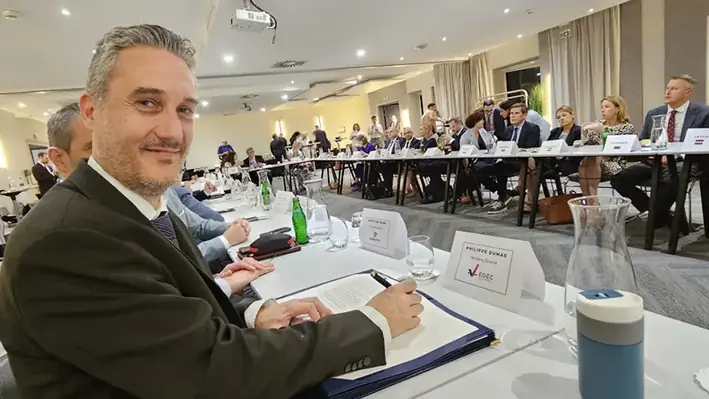
The European Geothermal Energy Council (EGEC) has become a signatory to a new European tripartite agreement aimed at accelerating the deployment of energy storage technologies across the European Union — with geothermal storage highlighted among the solutions expected to support industrial decarbonisation and the energy transition.
Prepared by the European Commission, the agreement brings together energy ministers from 22 EU member states alongside organisations representing energy storage developers and manufacturers, renewable energy developers, energy-intensive industries and financial institutions.
It seeks to speed up the deployment of energy storage solutions, including battery and thermal energy storage, to support a cleaner and more resilient European energy system.
EGEC Secretary General Philippe Dumas said signing the agreement was a proud moment for the organisation.
“The agreement brings together key players including storage solution providers, power and heat producers, energy consuming industries and the district heating and cooling sector, plus the banks who have a key role to play in financing energy storage projects,” he said.
“With the strong backing and commitment from the European Commission and national governments, we are optimistic that this agreement will provide a platform for accelerating the deployment of underground thermal energy storage across the whole of the EU, as well as the supply of geothermal lithium for batteries.”
He added: “In this way we can continue to show how all kinds of geothermal storage solutions can contribute to achieving a more resilient, efficient and sustainable energy system.”
Under the agreement, the European Commission will support member states in developing funding schemes for energy storage projects and explore additional support through the Industrial Decarbonisation Bank and the Innovation Fund.
National governments have committed to removing barriers to deployment, while financial institutions will work to strengthen financing for storage projects and technology providers will collaborate with industrial energy users.
Alongside the signing on 26 June, the Commission highlighted several energy storage projects it considers replicable across Europe:
The GESIIS project in Ostellato, Italy, which integrates geothermal energy with high-temperature aquifer thermal energy storage.
The Korvenmäki waste-to-energy plant in Salo, Finland, where deep geothermal wells store surplus heat for the district heating network.
The Kuebebierg district heating and cooling project in Luxembourg, which combines seasonal solar-to-ground thermal storage with geothermal boreholes.
The agreement was signed during a ceremony in Luxembourg chaired by European Commissioner for Energy Dan Jørgensen.
- Region: Europe
- Topics: Geothermal
- Date: 24th June 2026
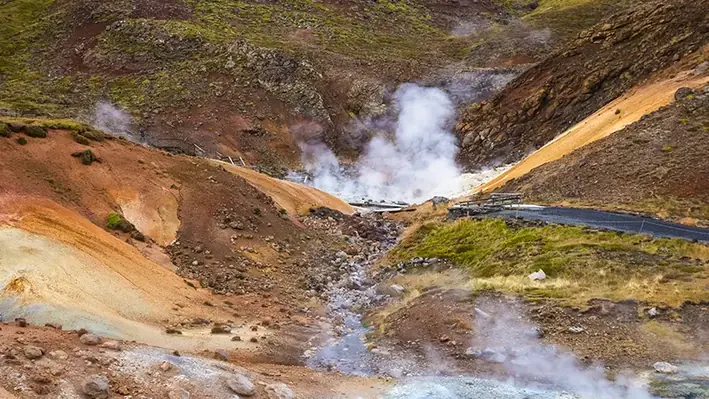
Europe must adopt a more coordinated approach to managing its underground resources if it is to unlock the full potential of geothermal energy and meet growing demands for the energy transition, according to a new position paper published by EuroGeoSurveys, a not-for-profit representing the continent's Geological Surveys.
- Region: Europe
- Topics: Geothermal
- Date: 22nd June 2026
Arverne Founder and CEO Pierre Brossollet is increasing his equity stake in the company, in a move the geothermal energy developer said reflects confidence in its long-term prospects.

- Region: Europe
- Topics: Geothermal
- Date: 19th June 2026
The British Geological Survey (BGS) has updated the UK geothermal catalogue of subsurface temperature measurements, rock thermal conductivity measurements and heat flow calculations.
Detailed subsurface information is required to be able to assess geothermal potential and the best way to exploit it, thereby accelerating the uptake of geothermal energy technologies.
The second digital version of the UK geothermal catalogue includes the addition of nearly 14, 000 more data points from 1,800 sites to inform geothermal assessments. It contains validated intellectual property rights and datasets from BGS-authored papers, new BGS thermal conductivity laboratory measurements as well as a bottom-hole temperature dataset from the UK Onshore Geophysical Library.
The files and an accompanying user guide can be accessed for use under the Open Government Licence, with the acknowledgement ‘Contains British Geological Survey materials © UKRI 2026’.
This data adds to the openly available geothermal data, models and information already contained within the UK Geothermal Platform and map explorer.
The UK Geothermal Platform, launched by BGS in 2025, is a freely available geothermal energy information hub providing a map overview of geothermal energy potential in the UK for four technologies, while a map explorer and a data access page provide detailed geoscientific datasets from several organisations. The platform provides national and local-scale information on geothermal potential across shallow and deep technology options, drawing together diverse information to deliver the information needed by heat policy, heat networks, the national zoning model and planning specialists. Users can assess the potential for towns, cities and industrial sites to be retrofitted with geothermal technology, and new development zones can be quickly assessed for strategic use of geothermal energy from the start of the development or planning cycle.
“The open release of the second digital version of the UK geothermal catalogue further adds to over 90 datasets and more than 60 reports that have been available on the UK Geothermal Platform since August 2025,” said Dr Alison Monaghan, head of BGS Geothermal.
“The data informs the feasibility stages of project developments, supporting the growth of the geothermal energy sector. The user guide describes the data sources and the acknowledged limitations with legacy datasets that are included.”
- Region: All
- Topics: Geothermal
- Date: 18th June 2026
News Sources Energy has signed a term sheet regarding the proposed strategic investment of geothermal drilling specialist Hydro Drilling.
- Region: Europe
- Topics: Geothermal
- Date: 10th June 2026
The European Geothermal Energy Council (EGEC) has joined a new Europe-wide initiative that will work on digital and energy solutions for data centres.
On 3 June 2026, the European Commission (EC) published a Strategic Roadmap for Digitalisation and AI in the energy sector.
The roadmap aims to accelerate the rollout of digital solutions, including European artificial intelligence (AI) infrastructure, in important areas relating to the decarbonisation process, such as electricity grid optimisation, energy efficiency in buildings and industry and demand-side flexibility.
It also addresses the increasingly heavy energy consumption of data centres and how they can be more sustainably integrated into the energy system, as well as the need to implement safeguards to mitigate potential challenges linked to the large-scale deployment of AI solutions in the energy sector.
As interest in AI intensifies, and tech companies roll out new data centre infrastructure, the race is on to secure dependable energy supplies in order to meet demand.
In the framework of the roadmap, EGEC reported that it is involved in a new initiative that aims to support collaboration among European industry associations to foster the sustainable integration of data centres in the energy system.
“This will be done through the definition of an EU model for tripartite agreements between data centre operators, energy-related parties and public authorities,” it noted in a statement.
“Based on numerous examples around the world, we can see that geothermal energy is increasingly being utilised by data centre operators,” it added.
The benefits of geothermal solutions include continuous 24/7 electricity generation, highly efficient geothermal cooling solutions and underground thermal energy storage.
“So there is huge potential for geothermal companies to get more involved in meeting the energy needs of data centres,” the EGEC statement added.
Also on 3 June, EGEC participated in a signing event in Brussels, which was hosted by the European Commissioner for Energy and Housing, Dan Jørgensen.
- Region: Europe
- Topics: Geothermal
- Date: 3rd June 2026
Geothermal is increasingly in the spotlight as policymakers and strategists search for solutions to the continent’s energy supply challenges.
- Region: Europe
- Topics: Geothermal
- Date: 28th May 2026
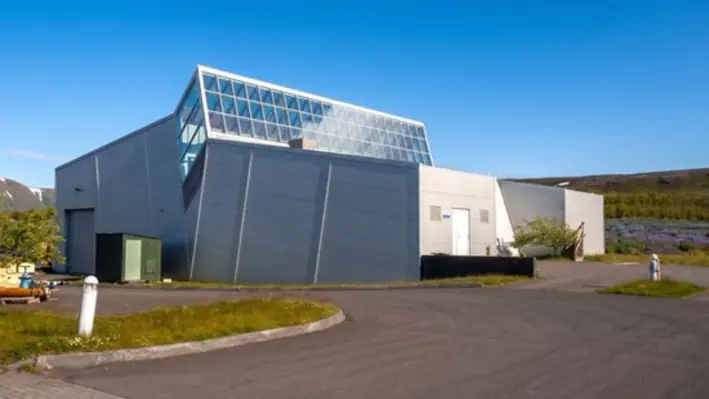
Syntholene Energy Corp. has announced that the construction of its geothermal-integrated synthetic fuel demonstration facility in Húsavík, Iceland, is ahead of schedule, with first operations now penned as early as next month
- Region: Europe
- Topics: Geothermal
- Date: 27th May 2026
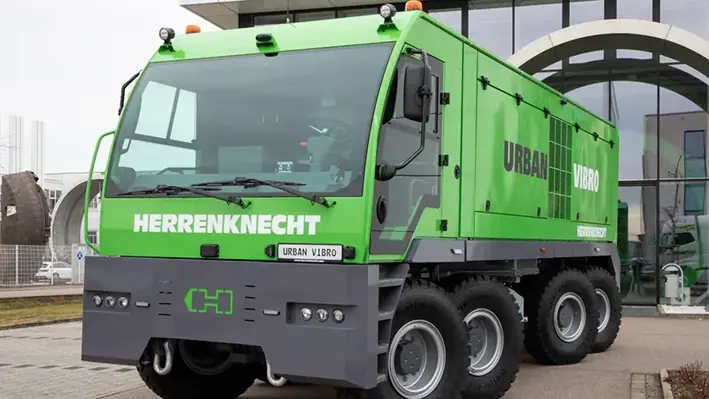
The Urban Vibro Truck is a seismic survey vehicle developed specifically for urban environments and one that could play a key role in the evolution of geothermal energy in Europe.
The truck, built by Herrenknecht AG, picked up the Ruggero Bertani European Geothermal Innovation Award 2026 from the European Geothermal Energy Council (EGEC) earlier this year at the European Geothermal Innovation Awards.
These awards recognise companies that make outstanding contributions to advancing geothermal energy in Europe.
Herrenknecht’s Urban Vibro Truck is a vehicle that is specifically designed for carrying out seismic surveys in towns and cities.
Its significantly reduced noise emissions enable surveys to be carried out during the night while minimising impacts on local residents.
The vehicle also has EU road approval as a tractor, which can reduce permitting requirements for seismic survey activities.
Speaking after the awards, which took place in Germany in February, Daniel Jaskulski, Division Manager – New Applications, Herrenknecht AG, said the vehicle is already working hard collecting data.
“We didn’t just build a nice vehicle that looks good, we have built a very functional vehicle which can make a real difference for the geothermal sector because now we can conduct seismic surveys much faster and also with better quality, and this is the most important thing,” he said.
The first Urban Vibro Truck was built as a scientific test vehicle, supported by the German Federal Ministry for Economic Affairs and Climate Action, with additional trucks now in production.
“We already have one truck that can carry out surveys in towns and cities, and our goal is to have 10 of our Urban Vibro Trucks on the market by the end of 2026,” said Jaskulski.
The Ruggero Bertani European Geothermal Innovation Award is given to companies which have made an outstanding contribution towards the field of geothermal energy in the form of innovative products, scientific research or project initiatives.
- Region: Europe
- Topics: Geothermal
- Date: 26th May 2026
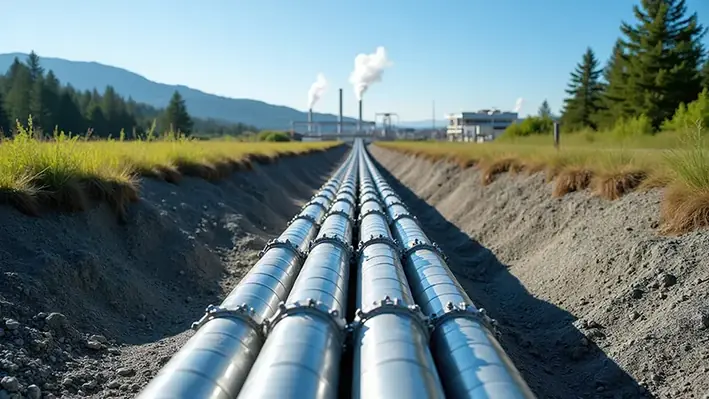
French geothermal group Arverne has announced the successful completion of a new major financing step for its subsidiary Lithium de France, alongside its partner Equinor Ventures AS.
The move supports the advance of Lithium de France’s pre-industrial phase, covering drilling activities, the DLE demonstration plant and Front-End Engineering Design (FEED), a key component of the Definitive Feasibility Study (DFS), according to an Arverne statement.
The project targets annual production of 27,000 tonnes of lithium carbonate, to equip nearly 800,000 electric vehicles, while delivering 2.2 TWh of geothermal heat to businesses, farmers and local authorities in Northern Alsace.
The new financing takes the form of a convertible note of up to €33mn, maturing on 30 June 2027, with Arverne and Equinor Ventures AS both participating at their pro rata share.
Upon completion of a qualifying financing of €50mn, the principal amount and accrued and uncapitalised interest will be converted to Lithium de France shares.Pierre Brossollet, Arverne’s founder and CEO of Arverne, said it marks a significant step in the execution of the company’s so-called ‘Dual Flow’ strategic plan and underscores the continued confidence of our long-standing partner Equinor ventures.
“Recognised by the French State as one of the 150 Major Strategic Projects, Lithium de France stands out as one of the most promising industrial developments in geothermal heat and lithium in Europe, combining competitiveness with the energy transition,” he said.
Katherine Peachey, head of Equinor Ventures, said this latest financing reflects the company’s continued support for Lithium de France.
“Equinor Ventures, a shareholder in Lithium de France since 2021, reaffirms its confidence in the company, its management team and its development plans to deliver sustainable, low-carbon lithium and geothermal heat production in Europe.”