
Europe
Europe
- Region: Europe
- Topics: Geothermal
- Date: 14th May 2026
Cindrigo Holdings has secured expanded eligibility for German government support across its geothermal licence portfolio under the Federal Funding for Efficient Heat Networks (BEW) programme administered by BAFA.
- Date: 12th May 2026
Next-generation geothermal solutions in Europe are set to be given a boost with a new collaboration between Tenaris and Green Therma, a Denmark-based developer of closed-loop geothermal systems.
- Date: 7th May 2026
Geothermal Engineering Limited (GEL), the UK’s leading developer of geothermal power and critical minerals extraction, has secured £10 million in financing from Dutch Bank ABN AMRO.
The funding will help fund both expansion of lithium production at GEL's United Downs plant and allow for preparation of further sites in Cornwall where the company already has planning permission. The backing of a major bank also enables GEL to start the process of raising significant capital for further expansion in the UK.
The United Downs deep geothermal power plant started power production in February 2026 and is the UK’s first integrated deep geothermal power and commercial-scale lithium production project. The first plant will deliver 3MWe of baseload electricity which is being sold via Octopus Energy to power around 10,000 UK homes.
The geothermal fluid at United Downs contains over 340 parts per million (ppm) of lithium making it one of the highest concentrations found in any well to date in the world. The team at GEL intends to use this financing to expand its direct lithium extraction (DLE) production from 100 tonnes of lithium carbonate per annum to close to 2,000 tonnes per annum by 2028/9. GEL is targeting production of over 18,000 tpa over the next decade from multiple sites in the UK.
GEL is also working on new and larger geothermal power projects across the county, and aims to produce a minimum of 25 MWe of renewable electricity across GEL’s portfolio over the next 10 years. It has further sites in Cornwall which have already received planning permission and are each anticipated to deliver at least 5 MWe of baseload power which is enough to power around 70,000 UK homes. The financing from ABN AMRO will also be used to start preparing these sites for drilling.
GEL has also received funding from Thrive Renewables plc, Kerogen Capital, the European Regional Development Fund and Cornwall Council.
Industry Minister Chris McDonald said: “We need critical minerals for everything, from the phones we use to the cars we drive, and this £10m boost for GEL is not only vital for ramping up domestic lithium production and creating local jobs, but a big step forward for geothermal power production in the UK."
Ryan Law, CEO of GEL, said: “Following the switch on of the UK’s first geothermal power and commercial-scale lithium production last month, this represents a cornerstone financing to help GEL realise our geothermal and critical minerals ambitions in the UK. It is exciting to have a partnership with ABN AMRO, with their experience of financing other European geothermal lithium projects.
“At a time of significant instability in global energy and mineral supplies, it is essential we start to realise the UK potential of 24/7 geothermal power and critical mineral production. GEL now represents a huge opportunity for both investors and government to get involved and help the sector to expand.”
- Region: Europe
- Topics: Geothermal
- Date: 5th May 2026
From May 2026, the European Commission will start building an EU-level geothermal database to gather detailed geological data and develop geothermal de-risking and insurance schemes to unlock private capital.
The update was highlighted in a recent insight article by law firm Linklaters and marks a significant boost in the promotion of geothermal energy across the continent.
It follows the release of the Commission’s AccelerateEU paper in late April, setting out a response to the energy implications of the conflict in the Middle East and the closure of the Strait of Hormuz.
The paper lays out other wide-ranging upcoming initiatives aimed at addressing soaring energy costs and safeguarding Europe’s energy security and competitiveness.
As well as short-term moves to mitigate the impact of the crisis, it highlights structural longer-term measures aimed at reducing dependency on fossil fuels and nurturing European resilience through clean energy, including geothermal, and electrification.
“In parallel, the Commission will continue supporting initiatives on solar thermal, biomethane and hydrogen, including a targeted review of the production criteria for renewable hydrogen, while safeguarding existing investments,” the Linklaters article noted.
The Commission intends to publish, by summer 2026, an Electrification Action Plan including a new electrification target, plus initiatives to increase the uptake of geothermal, biomethane and renewable hydrogen.
It will also includes measures addressing barriers for the electrification of the industrial, transport and building sectors, and the phasing out of fossil fuel subsidies.
Announcing its intentions on 22 April, the Commission said that it would support member states and stakeholders “in gathering detailed geological data”, for the creation of an EU-level database.“
The Commission will also explore supporting the establishment of geothermal derisking schemes and insurance schemes together with public financiers, including national promotional banks, to derisk investment and further mobilise private capital,” the statement added.
This could include support for geothermal energy projects beyond the EU’s borders.
“Under the Global Gateway initiative, the Commission is committed to promote, inter alia, international cooperation on geothermal energy projects where relevant.”
- Region: Europe
- Topics: Geothermal
- Date: 29th April 2026
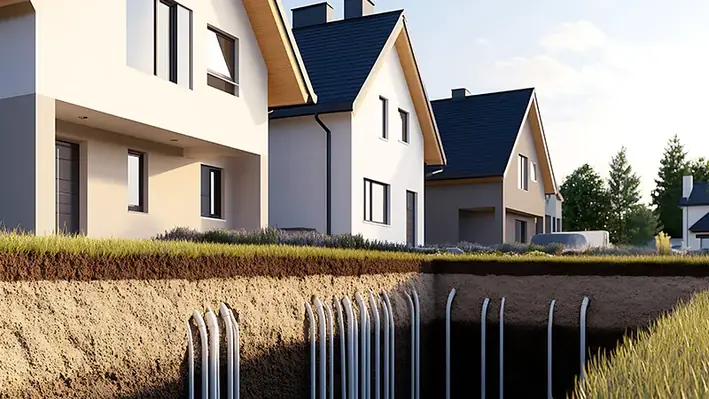
A new study from consulting firm Prognos, commissioned by the German Geothermal Association (BVG), the Bavarian Geothermal Association, and the German Heat Pump Association (BWP), finds that geothermal heat pumps are the most cost competitive solution for heating single-family and multi-family homes.

- Region: Europe
- Topics: Geothermal
- Date: 27th April 2026
Star Energy has signed an agreement for the sale of its Croatian subsidiary IGeoPen to Enna Geo, with the subsidiary holding three Croatian geothermal exploration licenses: Ernestinovo, Sjece and Pcelic.
- Region: Europe
- Topics: Geothermal
- Date: 22nd April 2026
Siemens and Vulcan Energy are collaborating to advance the Lionheart lithium and renewable energy project in Germany’s Upper Rhine Valley, Europe's first fully integrated lithium and renewable energy project.
Vulcan Energy has also designated Siemens its preferred supplier of automation and digitalisation technology until 2035.
Backed by the European Investment Bank (EIB), Vulcan’s integrated lithium and renewable energy project adapts existing, commercially proven technology to produce battery-quality lithium from geothermal subsurface brine in the Upper Rhine Valley, to deliver a local source of sustainable lithium for the European battery industry, while generating renewable energy and heat for local communities.
Lionheart targets production capacity of 24,000 tons of lithium hydroxide monohydrate (LHM), enough for around 500,000 electric vehicle batteries per annum, with a co-product of 275 GWh of renewable power and 560 GWh of heat per annum for local consumers, over an estimated 30-year project life.
Siemens will provide comprehensive automation and digitalisation capabilities through the delievery of end-to-end project solutions from its Xcelerator portfolio – including advanced instrumentation, distributed control systems, digital twin technology, industrial network, IT security and analytics that will enable integrated operations from resource extraction to final production. Siemens will also provide smart infrastructure solutions from across its buildings portfolio. The company is addionally investing in the Lionheart project.
“As both a strategic investor and a key technology partner, we are helping Vulcan Energy establish Europe’s first major sustainable source of lithium,” said Roland Busch, President and CEO of Siemens AG. “With our technology – from advanced automation and digitalisation to smart building solutions – we help to ramp-up production faster. This is essential to create a local lithium supply for our energy transition and a more competitive, resilient and sustainable European industry. It is a powerful example of strengthening growth and competitiveness in line with the Made for Germany initiative.”
“This partnership is an important step in unlocking future opportunities for growth, as we progress toward our goal of decarbonising Europe’s battery supply chain,” commented Cris Moreno, Vulcan’s Managing Director and CEO.
- Region: Europe
- Topics: Geothermal
- Date: 15th April 2026
Europe risks missing the ‘geothermal revolution’ unless policymakers act to unlock its potential, according to an open letter sent to EU leaders by Future Cleantech Architects and a broad coalition of industry partners.

- Region: Europe
- Topics: Geothermal
- Date: 13th April 2026
Energy resiliency and security of supply are two driving forces that could add momentum to the geothermal sector across Europe, amid oil and gas price spikes triggered by the Iran conflict in the Middle East.
In the UK, wind and solar blunted the worst of the price shocks in the first four weeks of the current fossil fuel crisis by displacing gas generation, delivering critical cost savings, according to a new report by Ember Energy.
It stated that new wind and solar saved Britain approximately £7mn per day in gas purchases.
The international price of gas surged in March 2026 following the start of the US-Israel war with Iran on 28 February, initiating the second fossil fuel crisis in Europe in just four years, after the Russia-Ukraine conflict.
As a result of new wind and solar capacity, in March 2026 gas power generation was 39% lower than in March 2021.
“The latest fossil fuel crisis proves that wind and solar have already lowered our dependence on gas and delivered genuine savings,” said Josie Murdoch, Energy Analyst, Ember.
“We now need to deploy more renewables and reduce our reliance on volatile gas for good.”
While the report does not explicitly cite geothermal, it claims that Britain is “better insulated” since the 2021-23 energy crisis.
As well as providing ‘unblockadable’ energy, geothermal can also deliver consistent 24/7 baseload power, unlike more intermittent solar or wind, making it attractive in terms of security of supply and resiliency.
Since October 2021, Ember said over 130 wind and solar projects have been delivered — 7.7 GW of new wind power (onshore and offshore, including floating) and 7.6 GW of new solar power.Britain now has close to 55 GW of wind and solar capacity, leading to higher renewable generation and increasingly displacing gas in Britain’s power system, it noted.
More broadly, across the European Union, analysis shows the cost of gas-fired power increased by more than 50% in the first 10 days of the Iran conflict, with some countries, such as Italy, more affected than others.
In a February 2026 report, Ember suggested that geothermal could replace 42% of the EU’s coal and gas-fired generation, providing a stable, ‘always-on’ alternative to fossil fuels for less than €100/MWh – the cost of coal and gas electricity.
“Once restricted to a few geological hotspots like Iceland or Tuscany, modern geothermal is now cost-competitive with gas across much of the continent,” said Tatiana Mindekova, Ember Policy Advisor and author of the February report.
“As Europe seeks to slash emissions while meeting the energy demands of heavy industry and AI data centres, this untapped resource offers a clean, firm power supply that remains insulated from the price volatility of imported fossil fuels.”
- Date: 9th April 2026
Expro has secured a Tubular Running Services (TRS) contract with Lithium de France to support new geothermal and direct lithium extraction wells in Alsace.
- Region: Europe
- Topics: Geothermal
- Date: 8th April 2026
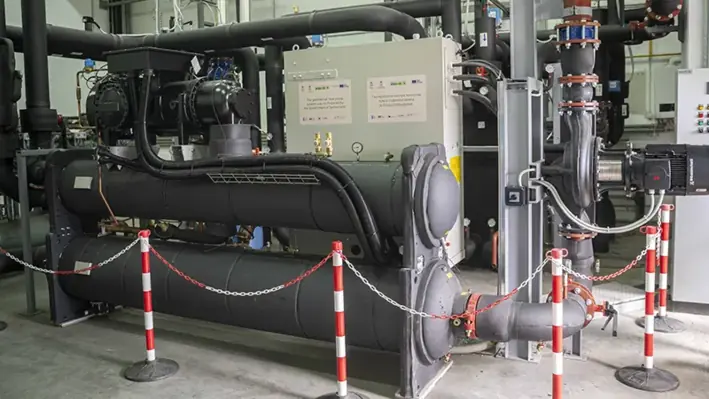
A geothermal heat pump has been installed at the site of Nelt Group, a leading logistics company in Serbia, as part of efforts to curb environmental impact.
The new geothermal system at the Dobanovci distribution hub will reduce greenhouse gas emissions by 40% by 2030 and save 7 million kWh of energy annually, according to a statement by the European Union (EU) mission to Serbia.
Serbia is not an EU member but provided support for the project — together with the Swiss government, with a US$200,000 donation — as part of the ‘EU for Green Agenda in Serbia’ initiative.
“The European Union stands with Serbia on the path of green transition. We support the adoption of cleaner technologies, better environmental management and progress toward a greener, more sustainable, and competitive economy,” said Andreas von Beckerath, Ambassador of the European Union to Serbia.
“Nelt’s example shows that renewable energy can replace fossil fuels in complex logistics operations while simultaneously contributing to both environmental and economic goals.”
The hybrid water-to-water system replaces a gas boiler and provides heating and cooling for two large halls with warehouse and office spaces, and a technical block for vehicle servicing.
It will provide about 40% of the total energy required for these facilities and operates in combination with the existing solar power plant.
“Our long-term commitment is to develop the company responsibly and sustainably through initiatives that deliver measurable and concrete results,” said Marko Cilić, Chairman of the Executive Board and Acting CEO of Nelt Group.
“The geothermal system in Dobanovci has been designed with a clear development perspective and will be an integral part of future logistics capacities, connected to the new warehouse within the centre.”
Anne Lugon-Moulin, Ambassador of Switzerland to Serbia, added: “The project with Nelt clearly shows how innovative solutions can contribute to reducing harmful emissions and improving energy efficiency, and demonstrates that companies can be both competitive and environmentally responsible.”
- Region: Europe
- Topics: Geothermal
- Date: 2nd April 2026
In a further sign of an improvement to financing conditions within the geothermal sector, Arverne Group has announced plans for a €33mn fundraiser via a bond issue.
The French geothermal company, listed on Euronext Paris, said in a statement that the issue would be open to existing shareholders including Bpifrance, Eiffel Essentiel, Ademe Investissement and Crédit Mutuel Equity.
The bond issue is significant in that it highlights growing investor confidence and interest across the broader geothermal sector.
Financing remains one of the biggest barriers to large-scale deployment, both within Europe and internationally.
The fund-raising issue also marks the first step of Arverne Group’s new ‘Dual Flow’ industrial and commercial roadmap through to 2033 in which it aims to accelerate business growth.
Its aggressive roadmap include first production and sales of heating and cooling in 2027 and first production and sales of geothermal lithium in 2028.
Looking ahead to 2031-2033, it aims to see around 4 TWh/year generated annually in France from deep geothermal energy, together with 27,000 metric tons of lithium carbonate annually — enough to power 800,000 electric vehicles using Arverne geothermal lithium.
Much of that will hinge on the company’s 2026 agenda, the first year of implementation of the Dual Flow plan.
This includes: a target of securing long-term contracts worth €400mn; drilling to be completed for the first doublet in the Lithium de France project and commissioning of the Direct Lithium Extraction (DLE) demonstration plant; continuing to reduce environmental impact as an innovative and responsible operator; and funding the group's industrial and commercial expansion.
In essence, the group aims to strengthen geothermal energy’s role in France’s energy mix and secure Europe’s supply of geothermal lithium, according to Pierre Brossollet, Arverne’s Founder and CEO.
“With a portfolio of nearly one hundred projects in France and major advances in the Lithium de France project, Arverne expects a significant acceleration from 2026 onward, with the signing of €400mn in long‑term contracts,” he said.
Brossollet also outlined his belief in the financial viability of the company and industry.
“The business models we are developing, with EBITDA margins above 50% and multi‑decade contracts, will generate secured revenues and recurring cash flows,” he added.
“Arverne Group is now at the dawn of a major value‑creation cycle.”