
Latest News
Latest News
- Region: Europe
- Topics: Geothermal
- Date: 26th May 2026
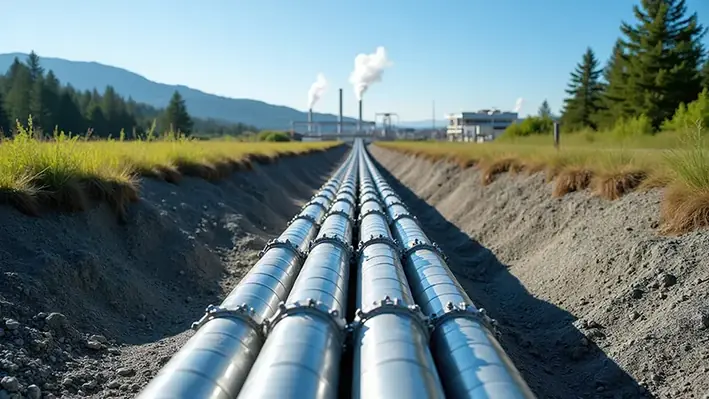
French geothermal group Arverne has announced the successful completion of a new major financing step for its subsidiary Lithium de France, alongside its partner Equinor Ventures AS.
The move supports the advance of Lithium de France’s pre-industrial phase, covering drilling activities, the DLE demonstration plant and Front-End Engineering Design (FEED), a key component of the Definitive Feasibility Study (DFS), according to an Arverne statement.
The project targets annual production of 27,000 tonnes of lithium carbonate, to equip nearly 800,000 electric vehicles, while delivering 2.2 TWh of geothermal heat to businesses, farmers and local authorities in Northern Alsace.
The new financing takes the form of a convertible note of up to €33mn, maturing on 30 June 2027, with Arverne and Equinor Ventures AS both participating at their pro rata share.
Upon completion of a qualifying financing of €50mn, the principal amount and accrued and uncapitalised interest will be converted to Lithium de France shares.Pierre Brossollet, Arverne’s founder and CEO of Arverne, said it marks a significant step in the execution of the company’s so-called ‘Dual Flow’ strategic plan and underscores the continued confidence of our long-standing partner Equinor ventures.
“Recognised by the French State as one of the 150 Major Strategic Projects, Lithium de France stands out as one of the most promising industrial developments in geothermal heat and lithium in Europe, combining competitiveness with the energy transition,” he said.
Katherine Peachey, head of Equinor Ventures, said this latest financing reflects the company’s continued support for Lithium de France.
“Equinor Ventures, a shareholder in Lithium de France since 2021, reaffirms its confidence in the company, its management team and its development plans to deliver sustainable, low-carbon lithium and geothermal heat production in Europe.”

- Region: North America
- Topics: Geothermal
- Date: 21st May 2026
XGS Energy has announced the appointment of Richard Chong as Chief Financial Officer, bringing over 25 years of energy finance experience to the role.
- Region: North America
- Topics: Geothermal
- Date: 20th May 2026
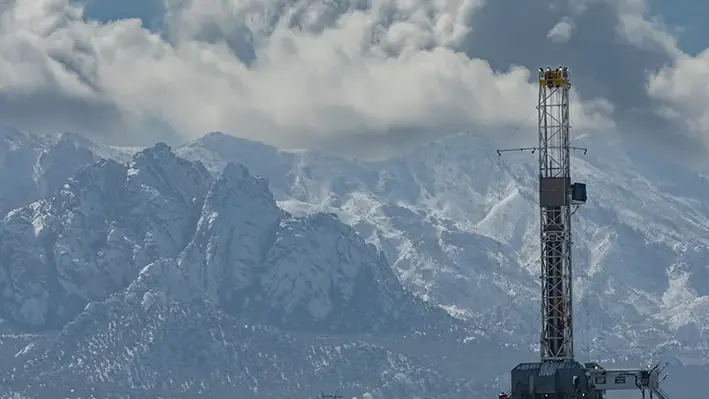
Energy services giant Baker Hughes has teamed up with Helmerich & Payne, Inc. (H&P), a provider of drilling solutions and technologies, to explore opportunties in geothermal.

- Region: North America
- Topics: Geothermal
- Date: 18th May 2026
The USA produced nearly three times as much solar, wind and geothermal power in 2025 – around 20% of the nation’s power – as it did in 2016, with overall growth in 49 states.
- Region: Europe
- Topics: Geothermal
- Date: 14th May 2026
Cindrigo Holdings has secured expanded eligibility for German government support across its geothermal licence portfolio under the Federal Funding for Efficient Heat Networks (BEW) programme administered by BAFA.
- Date: 12th May 2026
Next-generation geothermal solutions in Europe are set to be given a boost with a new collaboration between Tenaris and Green Therma, a Denmark-based developer of closed-loop geothermal systems.

- Region: North America
- Topics: Geothermal
- Date: 12th May 2026
Nevada-based geothermal developer Zanskar has signed a 20-year power purchase agreement (PPA) with NV Energy to supply 100 megawatts of carbon-free electricity by 2030, marking a major expansion of geothermal energy generation in the state.
- Region: Australia
- Topics: Geothermal
- Date: 8th May 2026
Singapore's Energy Market Authority (EMA) has issued a Request for Proposal (RFP) for a comprehensive study to assess the feasibility of deploying geothermal energy systems in Singapore.
The study of geothermal energy is part of EMA’s efforts to pursue pathways that can strengthen Singapore’s energy resilience and decarbonise its power sector.
While Singapore lacks the conventional geothermal energy resources commonly found in geolocally active regions such as volcanic zones, recent global advances in geothermal technologies have created new opportunities to harness sub-surface heat for power, heating and cooling needs. The feasibility study will thus assess the technical, environmental, and commercial feasibility of deploying next-generation geothermal systems in Singapore. The appointed consultant will also be tasked to identify areas for further study and propose policy frameworks for potential geothermal projects.
The feasibility study builds on the ongoing nationwide non-invasive geophysical survey commissioned by EMA in 2024 to identify areas in Singapore where geothermal energy might potentially be present. Together, the nationwide geophysical survey and feasibility study aim to provide a robust and holistic evaluation of Singapore’s geothermal energy potential. This will provide the Government with a basis to decide on the next steps in the pursuit of geothermal energy systems in Singapore.
The consultant for the feasibility study is expected to be appointed in 2026. The duration of the study will depend on the proposal submitted by the appointed consultant, as well as the scope and complexity of work required.
The deadline for submission of proposals is 29 June 2026, 4pm (Singapore time). More details on the RFP are available on the EMA's website at www.ema.gov.sg.

- Region: North America
- Topics: Geothermal
- Date: 8th May 2026
Fervo Energy has launched an investor roadshow ahead of its upcoming initial public offering (IPO) on the Nasdaq market that it hopes will value the company at up to US$6.5bn.
It hopes to tap into improved sentiment for clean energy firms, including geothermal, with plans to to raise up to US$1.3bn in the IPO by offering 55.6 million shares priced between US$21 and US$24 apiece.
In a filing with the US Securities and Exchange Commission on May 4, 2026, the company stated that Fervo Energy is positioned to become the “next great American energy company”.
In his introduction, Tim Latimer, CEO, said Fervo Energy is working to build a different type of energy company — one that treats each geothermal power facility as a repeatable product, not a one-off, complicated project.
“We intend to deliver power in standardised, 50-megawatt ORC units, relentlessly reducing complexity with every well drilled and every turbine installed,” he noted.
“With few locational constraints on our subsurface operations, we can develop sites to multi-gigawatt sites, harnessing learning curves to drive continuous improvement and make geothermal cheaper than it has ever been.”
The group also hopes to tap into interest in the alternative energy space driven by the rapid growth in AI data centres.
The Houston-based company’s first utility-scale deployment in the Cape Station site will provide a baseline for its core product, he added.
“We expect that each power unit built thereafter will improve on this baseline by using learnings to streamline engineering design.”
The progress of the IPO is set to be keenly tracked by other geothermal energy companies as the industry gains greater exposure and key test of investor appetite.
“American economic dynamism has long depended on reliable energy,” said Latimer. “The reliable energy of our time is next-generation geothermal.”
JP Morgan, BofA Securities, RBC Capital Markets, and Barclays are acting as joint lead bookrunning managers for the proposed IPO.
Baird, BBVA, Guggenheim Securities, MUFG, Societe Generale, William Blair, Piper Sandler, and Wolfe | Nomura Alliance are acting as additional bookrunners.
- Date: 7th May 2026
Geothermal Engineering Limited (GEL), the UK’s leading developer of geothermal power and critical minerals extraction, has secured £10 million in financing from Dutch Bank ABN AMRO.
The funding will help fund both expansion of lithium production at GEL's United Downs plant and allow for preparation of further sites in Cornwall where the company already has planning permission. The backing of a major bank also enables GEL to start the process of raising significant capital for further expansion in the UK.
The United Downs deep geothermal power plant started power production in February 2026 and is the UK’s first integrated deep geothermal power and commercial-scale lithium production project. The first plant will deliver 3MWe of baseload electricity which is being sold via Octopus Energy to power around 10,000 UK homes.
The geothermal fluid at United Downs contains over 340 parts per million (ppm) of lithium making it one of the highest concentrations found in any well to date in the world. The team at GEL intends to use this financing to expand its direct lithium extraction (DLE) production from 100 tonnes of lithium carbonate per annum to close to 2,000 tonnes per annum by 2028/9. GEL is targeting production of over 18,000 tpa over the next decade from multiple sites in the UK.
GEL is also working on new and larger geothermal power projects across the county, and aims to produce a minimum of 25 MWe of renewable electricity across GEL’s portfolio over the next 10 years. It has further sites in Cornwall which have already received planning permission and are each anticipated to deliver at least 5 MWe of baseload power which is enough to power around 70,000 UK homes. The financing from ABN AMRO will also be used to start preparing these sites for drilling.
GEL has also received funding from Thrive Renewables plc, Kerogen Capital, the European Regional Development Fund and Cornwall Council.
Industry Minister Chris McDonald said: “We need critical minerals for everything, from the phones we use to the cars we drive, and this £10m boost for GEL is not only vital for ramping up domestic lithium production and creating local jobs, but a big step forward for geothermal power production in the UK."
Ryan Law, CEO of GEL, said: “Following the switch on of the UK’s first geothermal power and commercial-scale lithium production last month, this represents a cornerstone financing to help GEL realise our geothermal and critical minerals ambitions in the UK. It is exciting to have a partnership with ABN AMRO, with their experience of financing other European geothermal lithium projects.
“At a time of significant instability in global energy and mineral supplies, it is essential we start to realise the UK potential of 24/7 geothermal power and critical mineral production. GEL now represents a huge opportunity for both investors and government to get involved and help the sector to expand.”

- Region: North America
- Topics: Geothermal
- Date: 7th May 2026
The Organisation of Eastern Caribbean States Commission has successfully concluded a strategic technical mission to Europe in a move to strengthen geothermal partnerships.
- Region: Europe
- Topics: Geothermal
- Date: 5th May 2026
From May 2026, the European Commission will start building an EU-level geothermal database to gather detailed geological data and develop geothermal de-risking and insurance schemes to unlock private capital.
The update was highlighted in a recent insight article by law firm Linklaters and marks a significant boost in the promotion of geothermal energy across the continent.
It follows the release of the Commission’s AccelerateEU paper in late April, setting out a response to the energy implications of the conflict in the Middle East and the closure of the Strait of Hormuz.
The paper lays out other wide-ranging upcoming initiatives aimed at addressing soaring energy costs and safeguarding Europe’s energy security and competitiveness.
As well as short-term moves to mitigate the impact of the crisis, it highlights structural longer-term measures aimed at reducing dependency on fossil fuels and nurturing European resilience through clean energy, including geothermal, and electrification.
“In parallel, the Commission will continue supporting initiatives on solar thermal, biomethane and hydrogen, including a targeted review of the production criteria for renewable hydrogen, while safeguarding existing investments,” the Linklaters article noted.
The Commission intends to publish, by summer 2026, an Electrification Action Plan including a new electrification target, plus initiatives to increase the uptake of geothermal, biomethane and renewable hydrogen.
It will also includes measures addressing barriers for the electrification of the industrial, transport and building sectors, and the phasing out of fossil fuel subsidies.
Announcing its intentions on 22 April, the Commission said that it would support member states and stakeholders “in gathering detailed geological data”, for the creation of an EU-level database.“
The Commission will also explore supporting the establishment of geothermal derisking schemes and insurance schemes together with public financiers, including national promotional banks, to derisk investment and further mobilise private capital,” the statement added.
This could include support for geothermal energy projects beyond the EU’s borders.
“Under the Global Gateway initiative, the Commission is committed to promote, inter alia, international cooperation on geothermal energy projects where relevant.”