
Latest News
Latest News

- Region: North America
- Topics: Geothermal
- Date: 5 September, 2025
The Bureau of Land Management (BLM) has announced it will host a competitive geothermal lease sale on October 21, 2025, featuring 113 parcels that cover a combined 377,678 acres across multiple Nevada counties, including Churchill, Esmeralda, Elko, Eureka, Humboldt, Lander, Lyon, Mineral, Nye, Pershing, and Washoe.

- Region: North America
- Topics: Geothermal
- Date: 1 September, 2025
The St. Kitts and Nevis geothermal power project is inching forwards as some of the industry’s top names compete to take part in drilling work, which is set to commence next year.
The 30-megawatt geothermal plant, once operational, is expected to provide baseload renewable energy for both Nevis and St. Kitts, delivering cleaner, more affordable electricity and advancing the Federation’s goal of true energy independence.
The Organisation of Eastern Caribbean States Commission (OECS) confirmed recently another major milestone in the journey with the official opening of bids for the production drilling phase.
A total of five bids from internationally recognised firms were received for the initiative on Nevis, including from some well-known industry players.
The five companies that submitted bids are:
Iceland Drilling Company (Iceland)
Marriott Drilling (UK)
Consortium Drilling (UK)
Ormat Technologies Inc. (USA)
IPS-USA (USA)
Drilling to produce geothermal energy to drive an electric turbine at Hamilton Estate is expected to begin in early 2026 following the awarding of the contract to the successful bidder, the OECS reported.
The strategic energy project has received international funding from a variety of lenders and donors including the Caribbean Development Bank, the Inter-American Development Bank, and the Saudi Fund for Development, reflecting its significance for the country and the whole region.
St. Kitts and Nevis will become the third OECS member state to develop a geothermal power plant, following Dominica’s planned inauguration of a 10-megawatt plant in the Roseau Valley at Christmas 2025.
Guadeloupe has been producing about 5% of its electricity from geothermal sources since 1986.
- Region: North America
- Topics: Geothermal
- Date: 2 September, 2025
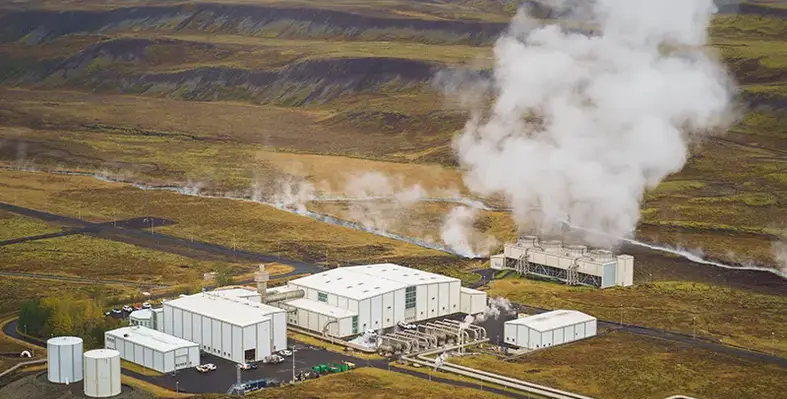
Baker Hughes, a global energy technology company, has secured an award from Fervo Energy Company, a pioneer in next-generation geothermal energy, to design and supply equipment for five Organic Rankine Cycle (ORC) power plants at Fervo’s Cape Station project near Milford, Utah, United States.
- Region: Europe
- Topics: Geothermal
- Date: 01 September, 2025
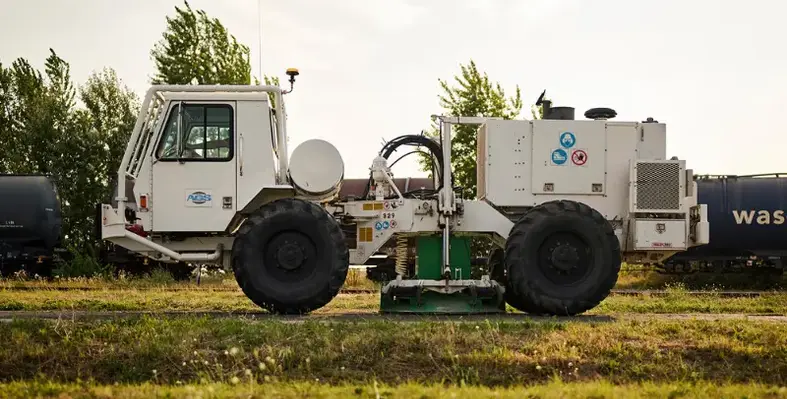
Integrated oil and gas company MOL is conducting geothermal exploration and has carried out 3D seismic surveys around the Danube Refinery in Hungary to assess the potential for geothermal utilisation.
- Region: North America
- Topics: Geothermal
- Date: 29 August, 2025
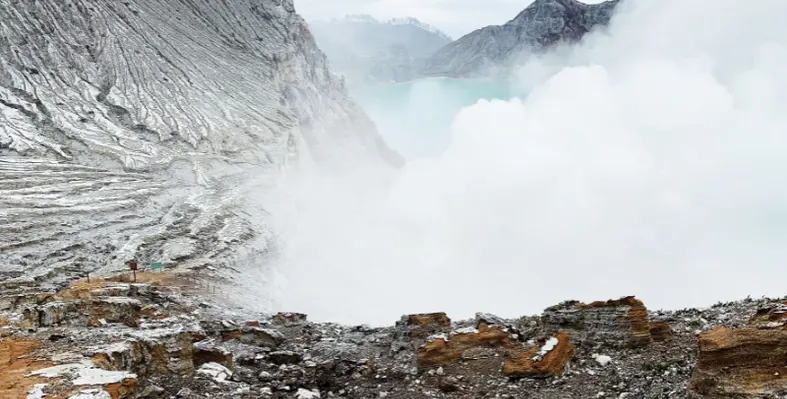
Ormat Technologies has signed a strategic commercial agreement with Sage Geosystems, marking a significant milestone in Ormat’s pursuit of innovative energy solutions.
- Region: Europe
- Topics: Geothermal
- Date: 28 August, 2025
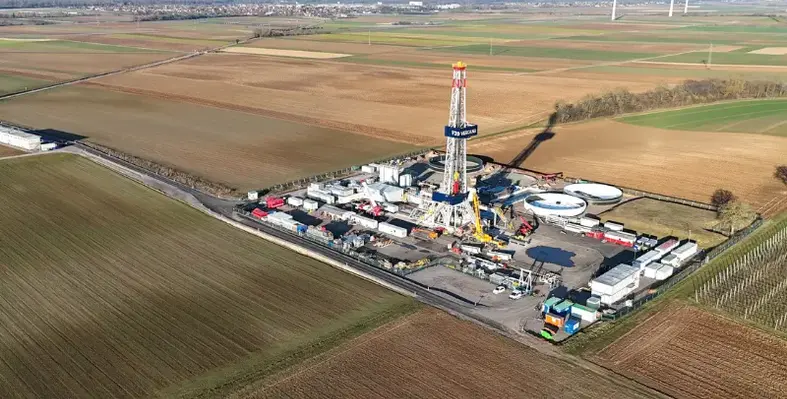
Technology and engineering solutions supplier, Odfjell Technology, has partnered with Vercana, Vulcan Group’s drilling subsidiary, for major geothermal project in Germany.
- Region: Europe
- Topics: Geothermal
- Date: 28 August, 2025
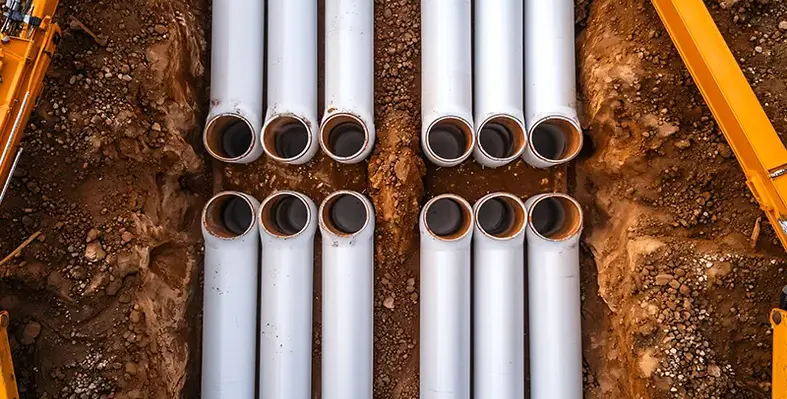
Germany’s Daldrup & Söhne AG has been awarded a contract to drill a pair of deep geothermal wells near Munich, in the south of the country.
In a statement, the company reported that the contract, worth €16.8mn (US$19.6mn), was awarded by Amperland Thermalwärme GmbH (ATW), a subsidiary of the joint municipal waste management company, based in Olching, northwest of Munich.
The drilling technology and geothermal energy specialist will now sink deflected deep geothermal wells with drilling lengths of around 2,430m and 3,300m on the site of the Geiselbullach cogeneration plant.
Work on the construction of the site is scheduled to begin in September this year, with actual drilling expected to be carried out from December 2025 to May 2026.
“It is impressive to see the determination with which the cities and municipalities around Munich are pushing ahead with the heat transition for their citizens,” said Andreas Tönies, CEO of Daldrup & Söhne AG.
ATW has received a grant of €8.8mn (US$10.3mn) for the financial implementation of the geothermal project, with the funds originating from the federal government’s Effective Heating Networks (BEW) programme.
The Daldrup & Söhne AG statement added that the project will enable the further expansion of the district heating network of the Olching municipal utility company and, for the first time in Germany, combine thermal waste utilisation with geothermal energy to expand the district heating supply in the region in a climate-neutral manner.
“This is a significant step for regional energy supply with fuel-independent heat,” added Tönies.
“The geological layers in the molass basin are now very well known and suitable for using deep thermal water to extract heat in a cycle system for local and district heating networks. We are already in talks with other potential municipal and private sector clients.”
- Region: Asia Pacific
- Topics: Geothermal
- Date: 27 August, 2025
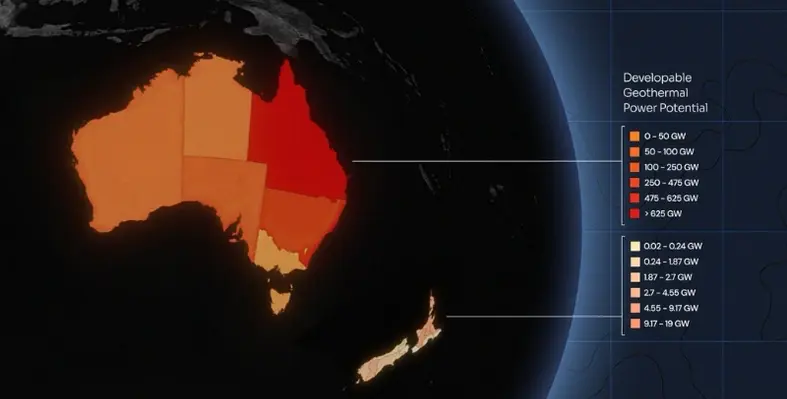
Project InnerSpace has launched the first-of-its-kind GeoMap Oceania, an interactive mapping tool which uncovers geothermal potential across a region.
- Region: North America
- Topics: Geothermal
- Date: 26 August, 2025
Ormat Technologies, Inc., a prominent geothermal and renewable energy company, has announced the signing of a 25-year extension to its existing power purchase agreement (PPA) with the Southern California Public Power Authority (SCPPA).

- Region: Asia Pacific
- Topics: Geothermal
- Date: 26 August, 2025
First Gen Corp.’s P50-billion gas deal with Prime Infrastructure Capital Inc. will provide a significant funding boost to its geothermal power business, as the company aims to reach 13,000 megawatts (MW) of renewable energy by 2030.

- Region: North America
- Topics: Geothermal
- Date: 22 August, 2025
TGS, a global leader in energy data and subsurface intelligence, has unveiled a new series of Basin Insight Reports designed to support operators, analysts, and investors in navigating North America’s rapidly evolving energy landscape—estimated to be worth over US$2tn.
These reports combine rich geological data with production trends and economic performance, offering a holistic perspective on basin development dynamics.
Built on TGS' extensive multi-client library, the reports integrate geological, geophysical, and well data to provide in-depth analysis that goes far beyond surface-level observations. The result is a data-driven tool that helps energy professionals better understand what’s driving performance in specific basins—blending insights from the subsurface with real-time production metrics, drilling costs, and operator strategies.
The first in the series explores the differences between the established Legacy Haynesville and the up-and-coming Western Haynesville—often referred to as “Waynesville”—which includes Robertson, Limestone, Freestone, and Leon counties in Texas. This analysis highlights the competitive nature of Waynesville’s well performance and its untapped growth potential, especially when compared with the more mature Legacy Haynesville. One key element that stands out in the Western region is the infrastructure challenge, particularly regarding midstream capabilities required to fully exploit the high-pressure, deep gas reservoirs found there.
David Hajovsky, EVP of Multi-Client at TGS , said,“What we're seeing in the Western Haynesville is a play rapidly approaching Legacy economics, but the infrastructure bottleneck means timing is everything". He also added, "Our Basin Insights Reports provide the integrated view needed to navigate both the geological potential and the logistical realities."
The Basin Insight Reports are structured to support continuous learning and evaluation across various regions. Each edition will focus on a specific basin and provide actionable intelligence to identify high-value drilling opportunities and guide capital allocation. Where available, the reports will be further enhanced by TGS’ vast onshore seismic data, offering greater subsurface clarity and supporting more accurate forecasting.
As TGS expands its onshore seismic acquisition across key basins, the insights offered through these reports are set to grow deeper and more precise, adding even more value for stakeholders across the energy ecosystem. These reports are designed not just for operators and investors, but also for media, analysts, and market commentators looking for reliable, in-depth understanding of changing basin dynamics.
With Basin Insight Reports, TGS positions itself as a critical partner in the energy transition—delivering the kind of integrated, intelligent analysis required to make informed decisions in a fast-moving, high-stakes environment.
- Region: Europe
- Topics: Geothermal
- Date: 21 August, 2025
Earlier this month, 3t, an organisation specialising in safety-critical training for hazardous industries, announced a new collaboration with Aberdeen-based Robert Gordon University (RGU) to establish a Geothermal Simulation and Modelling Platform.