
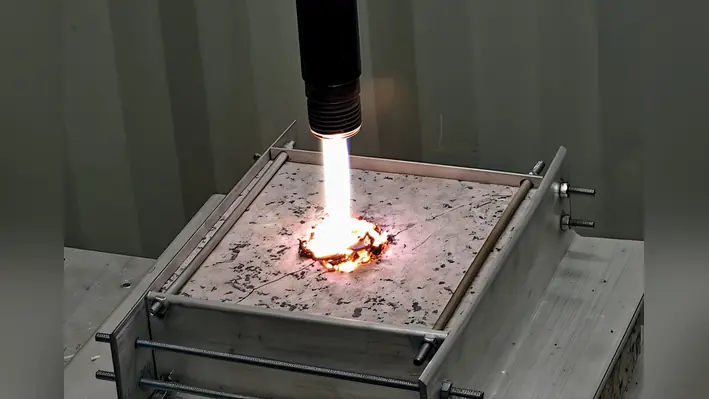
 Kyoto Fusioneering, a global fusion technology and integrated systems developer, has received an order from USA-based Quaise Energy for a gyrotron system for use in Quaise’s millimetre wave drilling technology for superhot geothermal development, marking the application of a tgytoechnology developed for fusion to advance next-generation geothermal.
What is a gyrotron?
Gyrotrons are fundamental to the operation of fusion energy devices. A gyrotron is an electron tube classified as a type of electron MASER (Microwave Amplification by Stimulated Emission of Radiation). These high-power microwave systems generate millimetre-wave electromagnetic radiation, which is essential for heating and driving current in plasmas within Magnetic Confinement Fusion devices.
Why does geothermal drilling need fusion hardware?
Quaise’s drilling system uses millimetre waves generated by a gyrotron to vaporise rock, to reach the depths and temperatures associated with superhot geothermal resources that it is uneconomical to reach with conventional mechanical drilling. Enabling faster drilling than using conventional methods, millimetre wave drilling allows drilling as far down as 20 km to reach temperatures of up to 500 degrees celsius. Unlike conventional drilling, the method requires no downhole hardware. The approach was developed over more than a decade of research at the Massachusetts Institute of Technology.
KF’s gyrotron expertise
KF designs and builds gyrotrons across frequencies from 28 GHz to 236 GHz, including multi-frequency tubes. Its fusion projects include two dual-frequency units for the UK Atomic Energy Authority’s MAST Upgrade and a 1-megawatt system for Tokamak Energy’s ST40. The company has also supplied the first of two gyrotrons for the U.S. Department of Energy’s DIII-D National Fusion Facility. It has completed the design of a 1.5- to 2-megawatt-class system for Germany’s Wendelstein 7-X stellarator and ASDEX Upgrade.
In September 2024, KF was selected for NEDO’s Deep-Tech Startups Support Program in the Green Transformation (GX) field — NEDO is Japan’s national energy and industrial technology R&D funding agency — to develop high-power, continuous-operation gyrotrons and power supplies for superhot geothermal development. The Quaise order is the first commercial outcome of that work.
Most of the fusion machines operating today are experimental devices that heat plasma in pulses lasting only seconds. With geothermal drilling, on the other hand, the millimetre wave source has to run continuously for as long as the borehole is being advanced. The unit KF is supplying to Quaise is specified and designed for that purpose.
Building a gyrotron for continuous operation for a geothermal customer is work directly relevant to fusion.
"The gyrotron supply chain has to grow well beyond its current size to meet what fusion will need, and it has to grow before that demand arrives, not after. KF is investing in that capability now and taking commercial work that builds it. This work with Quaise is an important part of that," said Takashi Imai, Group CEO, Plasma Heating Group, Kyoto Fusioneering.
Japan holds one of the world’s largest geothermal resource bases, and its deep, high-temperature resources remain largely undeveloped because of economic considerations around conventional drilling. Japan’s Ministry of Economy, Trade and Industry and NEDO are supporting superhot geothermal, closed-loop systems, and Enhanced Geothermal Systems under the Green Innovation Fund. KF intends to apply its learnings from this project to next-generation geothermal development in Japan.