
 OMV and Energie Steiermark are teaming up to advance their deep geothermal energy project in Styria, southeastern Austria
At a joint event, the two companies presented ‘Tiefenkraft’ — an initiative to assess the region’s geothermal potential.
In the long term, this could deliver up to 670 GWh of geothermal energy annually by 2037, equivalent to around 50% of the district heating supply in the greater Graz area.
Crucially, the project is set to move into its next phase, with exploration drilling planned for late 2026, bringing a major geothermal heating source for Graz closer to reality.
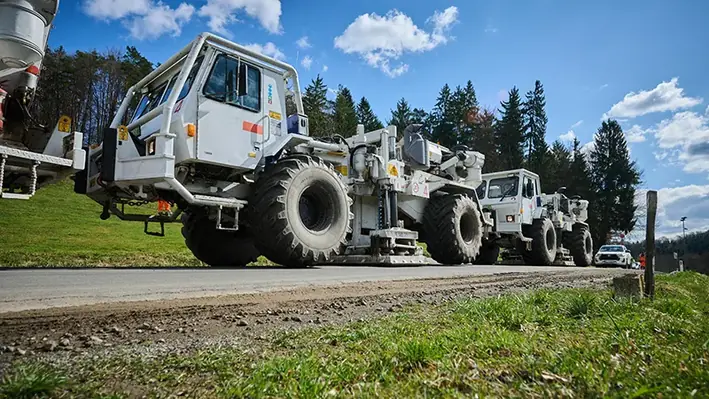
Between February and April 2026, a seismic survey was carried out along 900 km of roads used as measurement lines. The data will form the basis for a detailed subsurface model as well as for the next project phases.
Berislav Gašo, OMV Executive Vice President Energy, said harnessing geothermal energy is key to securing an independent, climate-neutral heat supply in Austria.
“With our expertise in geology, drilling technology and project development, we are making a vital contribution to a joint assessment of the region’s geothermal potential with Energie Steiermark and helping lay the foundation for a sustainable heat supply.”
The next major step is a planned exploration well, Petersdorf 2, in St. Marein near Graz, with drilling expected to begin in the fourth quarter of 2026.
Preparatory work will begin in September 2026, with drilling currently scheduled to begin by the end of the year, subject to permitting and the completion of the drilling site construction.
The drilling and subsequent testing phase are expected to take around three to four months and will provide further insights into the geothermal potential and geological conditions.
If the results are positive, the next investment decision will cover the development of a first geothermal doublet — comprising one production and one injection well — along with comprehensive testing.
In parallel, two possible additional wells are planned to assess the feasibility of an Aquifer Thermal Energy Storage (ATES) system, enabling surplus heat to be stored underground and used seasonally.
During this period, planning and groundwork for a pipeline connection to the city of Graz will also take place.
A final decision on full implementation — including all production and injection wells, the construction of the pipeline connection to the district heating network and the installation of surface facilities — will be taken after completion of comprehensive testing, the two companies said.
First heat delivery could begin as early as 2030, the two companies reported.
“With ‘Tiefenkraft’, together with OMV we are taking a decisive and forward-looking step for the heat supply in Styria,” said Martin Graf and Werner Ressi, members of Energie Steiermark’s management board.
“This project represents the largest single investment in the history of Energie Steiermark and combines the expertise of two strong partners across the entire value chain. Deep geothermal energy is a key building block of the heat transition and will enable a significant share of Graz’s district heating to be supplied in a climate-friendly and regional way in the future.”