
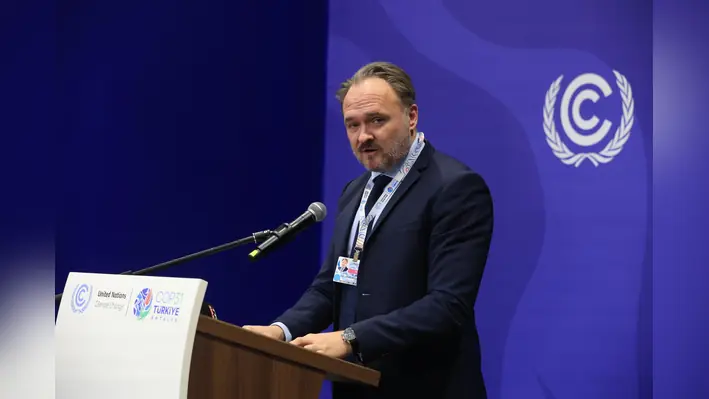
 The European Union (EU) has joined the Global Geothermal Ambition 2050 pledge at COP31 in Antalya, Turkey, supporting an international effort to significantly expand geothermal energy deployment for both power generation and heating.
Launched by the Turkish COP31 Presidency in collaboration with the International Renewable Energy Agency (Irena), the initiative aims to increase global geothermal energy supply to 12 times 2025 levels by 2050.
According to Irena analysis referenced in the pledge, global primary geothermal energy supply for heat and power could increase from approximately 2.5 exajoules (EJ) today to 31 EJ by 2050.
Global geothermal power capacity is also targeted to grow from 15.6 GW in 2025 to 193 GW over the same period.Signatories have committed to strengthening policy frameworks, improving investment opportunities, supporting research and development, and developing geothermal supply chains.
The initiative also highlights the importance of international cooperation, technical assistance and responsible project development.
EU Commissioner for Energy and Housing, Dan Jørgensen said geothermal energy has a “key role” to play in strengthening Europe’s energy security, competitiveness and resilience.
“It offers a reliable, clean source of heating and cooling, as well as continuous baseload electricity, independent of weather conditions and global energy price fluctuations,” he was quoted as saying in an EU press statement.
“By harnessing this clean energy source, we can reduce emissions, support affordable energy for our citizens and businesses, and reinforce our strategic autonomy. By joining this pledge, the European Union reaffirms its commitment to unlocking geothermal energy’s full potential as a cornerstone of a more resilient, sustainable and diversified energy system.”
On a broader level, the pledge reflects growing international recognition of geothermal energy as a complementary component of the global energy transition.
Its ability to provide weather-independent heat and power offers opportunities to diversify energy supplies, support decarbonisation and improve long-term energy system resilience, and has attracted the attentions of more interested parties, from investors and financiers to technology groups.