
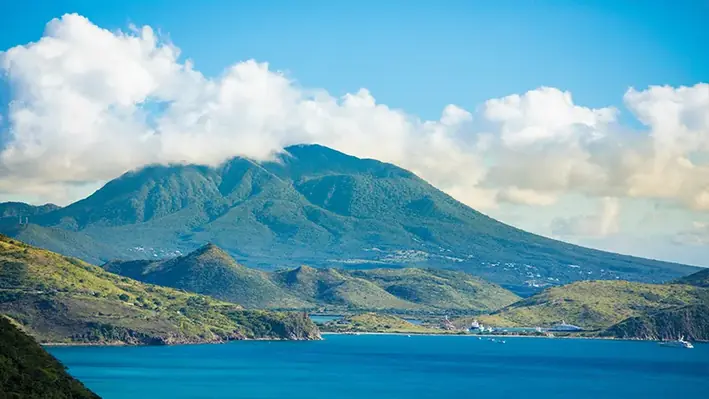
 The Nevis geothermal project is moving ahead, with the drill rig that will be used to develop the island’s energy resources undergoing final inspection in Iceland ahead of mobilisation to the Caribbean island.
Iceland Drilling has been tasked with the drilling work after signing a contract with Nevis Electricity Company (Nevlec) back in April this year.
Premier of Nevis and Minister of Energy in the Nevis Island Administration, Mark Brantley, said in late August that the inspection work represents the final major step before the rig is transported to the project site.
“The final pre-condition for mobilisation of the drill rig to Nevis is an inspection of that drill rig, and that inspection is currently underway in Iceland,” he said.
The inspection work is being conducted by Scotia Drilling Consultants, a UK-based company, and is focused on the rig’s structural, mechanical, operational and safety systems.
Brantley said completion of the inspection will clear the way for the next stage of the project.
“Once this drill rig inspection is completed, then it would mean that we have now done all that is necessary in order to move this to the next phase, which is the actual mobilisation of the rig to the island of Nevis.”
Mobilisation of the rig and other heavy equipment is expected to take place throughout September and October, with work on the first well scheduled to begin by the end of the year.
The 272-metric-tonne Drillmec HH-300 ‘Týr’ rig is expected to drill five geothermal wells at the Hamilton geothermal site.
Technical work is also underway in Nevis at the project site to prepare for the arrival of the rig and the commencement of drilling.
“Civil works for the well pad will be done by a company called COWI and that too is a company from Iceland and that company will be supervised by Iceland Drilling,” said Brantley.
The development of the geothermal wells is a critical component of a wider project which is intended to harness Nevis’ indigenous geothermal resource for electricity generation.
The planned 30-megawatt power plant would use the geothermal resource to generate clean, renewable electricity, reducing Nevis and St. Kitts’ dependence on imported fossil fuels and strengthening the Federation’s energy security.